
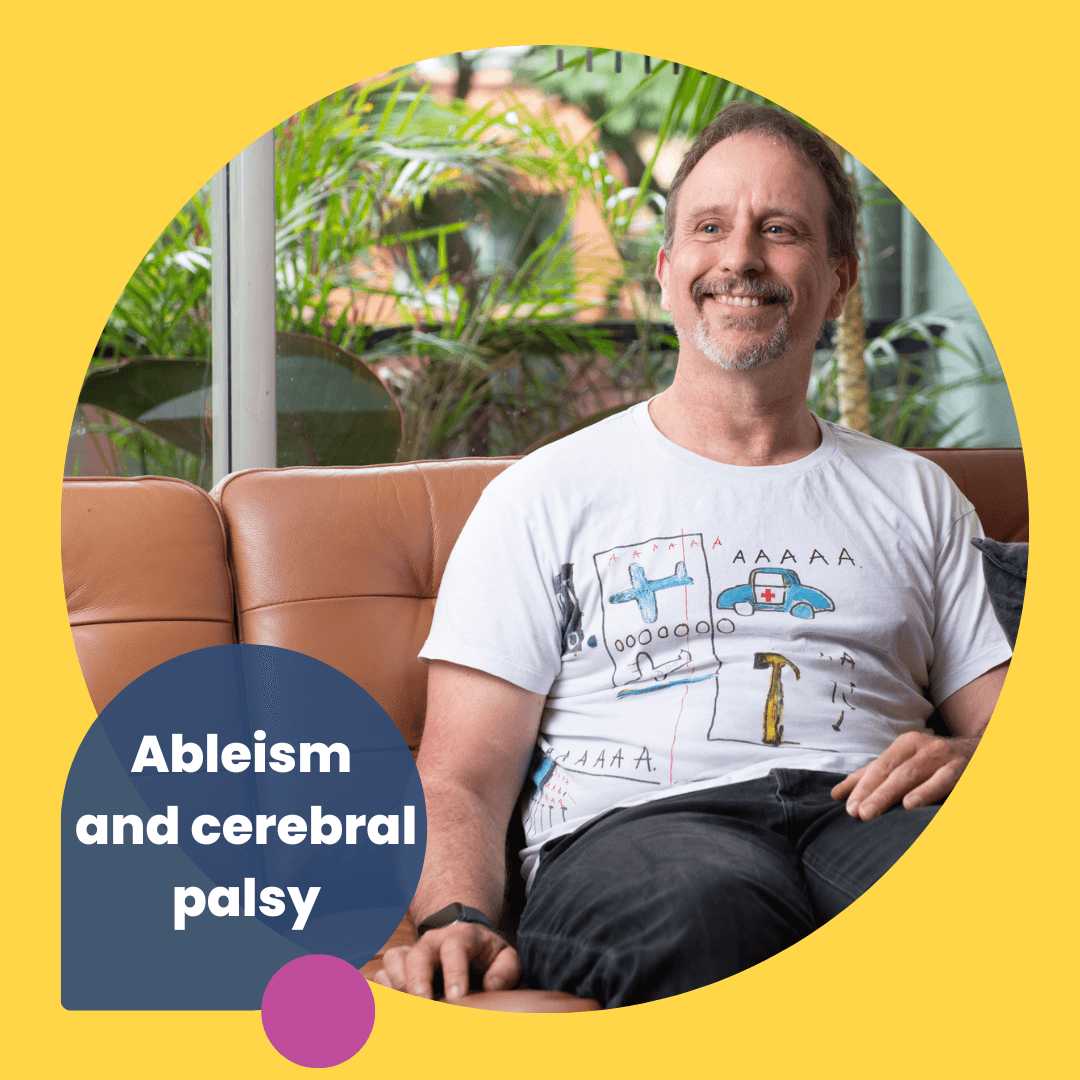
Ableism and Cerebral Palsy: Everyday Experiences and Their Impact
Have people ever told you that you were inspirational when you were doing the most ordinary of things? Perhaps you were just doing your shopping. Or have you ever been called names because of your disability? What about coming across people who want to pray for you to cure your cerebral palsy?
Have others assumed you can’t do something because of your cerebral palsy? Maybe they touched you or your equipment unnecessarily, or without asking. Did they try to provide help when you neither asked for nor needed their assistance?
Common experiences of people with cerebral palsy
These are all common experiences of people with cerebral palsy. From the seemingly kind to the horribly cruel, they are all examples of ableism. Ableism is a form of discrimination, like racism and sexism. It is when you are treated unfairly because of your disability.
Ableism happens in playgrounds and classrooms, at work and at home, and out in the community. Ableism is harmful to your health and wellbeing, particular when those who are ableist are family members or friends.
We are a group of people with cerebral palsy and our allies. We came together with the idea that people with cerebral palsy could research things that matter to us. We chose to research ableism, because it affects the lives of many people with cerebral palsy.
Within our group, most of us have experienced ableism or other forms of discrimination. We were interested in finding people with cerebral palsy who had successfully dealt with ableism.
Specifically, we wanted to know how people with cerebral palsy have successfully:
• Confronted ableism during interactions with others
• Coped with the memories of ableism long after these interactions have passed.
This article is the first of a three-part series in which we discuss what we learned from surveys and interviews with ten adults with cerebral palsy who had successfully confronted or coped with ableism. In this article, we focus on what these adults told us, in general, about ableism. The second and third articles cover how they successfully confronted and coped with ableism.
Ableism is Relentless
Encountering ableism was a common experience of the adults involved in our research. They said that the negative effects of ableism build up over time. One person told us they wished they could hit the pause button on ableism for a while, because it felt like the effects of ableism were compounding. They mentioned that there are the big moments that you felt impacted your life, but there are also all the micro, subtle forms of ableism as well.
Successfully Confronting and Coping with Ableism is Hard!
The first lesson we learnt in the research was that successfully confronting and coping with ableism was hard. Some people chose not to be involved in the research because they couldn’t think of times when they had successfully confronted ableism. They also said they weren’t particularly good at coping with ableism. Knowing that many people struggled to confront and cope with ableism highlights the importance of finding ways to successfully deal with ableism.
The people involved in our research also found it hard to think of times when they had successfully confronted ableism. They said it was hard because sometimes they:
• Did not realise what someone else did was ableism
• Ignored ableism
• Did not know if they had been successful in confronting ableism.
Some people told us about what helped them or made it harder to confront ableism. Things that helped them were having confidence and dealing with their own negative feelings about disability. As one person suggested, it is hard to confront ableism from others if you can’t deal with your own ableism.
Some of the things that hindered them were that those who are ableist:
• Are often trying to do the right thing
• Often do not know what ableism is
• Are not used to people with disability confronting them
• Often have wrong ideas about what it is like to live with disability.
Although some instances of ableism are clearly hostile (e.g., name calling, physical abuse), other types of ableism, on the surface, seem like acts of kindness. Calling someone with cerebral palsy inspirational for doing ordinary things or helping them (without being asked) are common examples. Because they seem kind, what can be overlooked is the hidden assumption that people with cerebral palsy are incapable.
If someone thinks you’re inspirational for doing everyday things, they probably have low expectations of what people with cerebral palsy can do. Similarly, if they provide help unnecessarily, they likely think you can’t do things by yourself. Confronting someone who is complementing you or is just trying to help is difficult.
Other things that hindered people were:
• Having self-doubt
• Failing to recognise ableism
• Feeling pressure to find ideal responses
• Finding it tiring to have to explain themselves.
Although dealing with ableism is hard, our participants also told us about times they successfully confronted ableism. In the second part of our series, we turn our attention to how people with cerebral palsy have successfully confronted ableism – the situations, what people with cerebral palsy did, and the outcomes of the confrontations.
Authors: Cadeyrn Gaskin, Sue Harris, Finn O’Keefe, Alex Birnie, Debbie Dorfan, Adam Goodridge, and Shelley Spencer on behalf of the Deakin University and Cerebral Palsy Support Network team
Next in this series, Successfully Confronting and Coping with Ableism – Part 2 explores how adults with cerebral palsy confront ableism in everyday situations and the positive outcomes that can result.

If this article has raised issues for you, or you’re concerned about someone you know, call Lifeline on 13 11 14 for free, 24-hour crisis support or Beyond Blue on 1300 224 636 or at www.beyondblue.org.au for telephone or online counselling. In an emergency, call 000.