
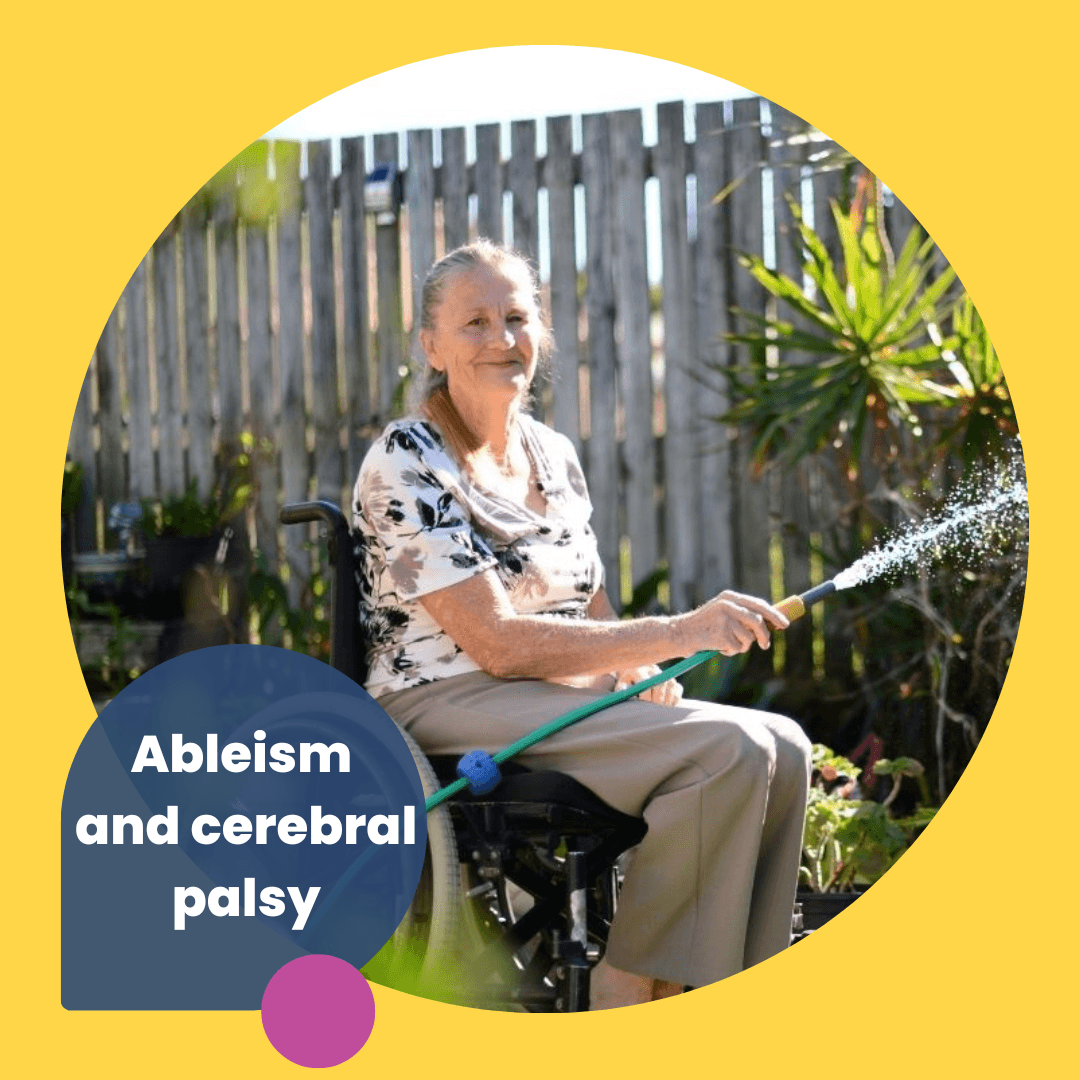
Ableism and Cerebral Palsy: Everyday Experiences and Their Impact
People with cerebral palsy can do something about ableism. When faced with ableism, confronting the person who is ableist can be a positive way of dealing with these situations. Confronting ableism means doing something about being treated unfairly due to disability. Confronting has the potential to reduce future ableism and to improve the mental health of those who experience ableism.
Confronting ableism could mean talking to the person directly, making an offensive hand gesture, or going to someone for help. In our research, it was up to each person with cerebral palsy to decide if what they did was successful. In other research, some people felt successful when people who were discriminatory changed their behaviours or apologised for what they did. Others felt successful because they felt better after confronting the person. We expected it might be similar for people with cerebral palsy.
In our research, we asked people with cerebral palsy to describe times they were successful in confronting ableism. For each example, we asked them to tell us about the situation, what they did, and the successful outcome. Here’s what we found.
Ableism Occurs in Many Situations
A shopper tried to help a person with cerebral palsy enter her PIN at the checkout.
A stranger referred to a person with cerebral palsy as inspirational for achieving things that were typical of a person of her age.
Waitstaff directed their questions to the friends of a person with cerebral palsy rather than to her.
A stranger followed a person with cerebral palsy into his workplace and asked to pray for him.
A fellow bar patron asked a person with cerebral palsy, “What’s wrong with you, love?”
Parents at the school gate assumed a support worker was the mother of a person with cerebral palsy’s child.
These brief examples provide some insight into the situations in which the people with cerebral palsy involved in our research confronted ableism. They provided 23 examples in all, covering many types of ableism. Denial of privacy and spread effect were the most common types of ableism. Denial of privacy is when someone demands personal information from you or needlessly touches you or your equipment.
An example from our research is when a stranger enquired about the person with cerebral palsy’s limp. Spread effect is when someone thinks that because you may not be able to do one thing you are not able to do many things. For example, in our research, nurses were concerned about how a person with cerebral palsy would be able to care for her newborn.
There are Different ways of Successfully Confronting Ableism
People took one of five main actions when they successfully confronted ableism. These actions were:
• Educating those who were ableist – People explained about their cerebral palsy and tried to correct the wrong ideas that others had. One person made clear that she was her child’s mother, not the support worker. Another explained that, given her ability and the support she received, her achievements were not exceptional.
• Being independent – People told others that they did not need help and did things on their own.
• Self-advocating or requesting advocacy – People spoke up for themselves and asked others for help.
• Trying to make those who were ableist feel uncomfortable – People refused to answer personal questions. They sometimes gave cheeky responses and asked equally personal questions.
• Disengaging with those who were ableist – People ignored ableism, avoided those who were ableist, and encouraged others to avoid them too.
Confronting Ableism can have Positive Outcomes
People spoke about six main outcomes from confronting ableism. These outcomes were:
• Changed behaviour of those who were ableist – Changes in how those who were ableist behaved at the time or said they would behave in future.
• Possibly changed thinking of those who were ableist – Changes in what those who were ableist knew about cerebral palsy and what people with cerebral palsy can do.
• Actions to prevent ableism happening again – When those who were ableist were confronted sometime after they were ableist. For example, when school students were asked to say sorry for saying something unkind.
• Disengagement – When people left situations where the ableism occurred. They sometimes told others to avoid those who were ableist.
• Changed thinking – When people with cerebral palsy learnt more about ableism and how to deal with it.
• Feeling successful – When people felt good about what they did when faced with ableism.
There may be Links Between Actions and Outcomes
Different ways of responding to people who are ableist may be linked to different outcomes. Educating those who were ableist and being independent tended to be linked with changed behaviour and thinking of those who were ableist. Trying to make those who were ableist feel uncomfortable was often linked with disengagement and feeling successful. Other actions were related to multiple outcomes.
One of the most positive findings from the research is that confronting ableism can have successful outcomes. In some cases, confronting ableism changed the behaviour of those who were ableist. Perhaps these people may be less likely to be ableist in the future. In many instances, people felt better after confronting those who were ableist. We all could consider using the five actions when we encounter ableism in our own lives.
Whether we confront or not and whether these confrontations are successful or not, we have to cope with the enduring effects of ableist encounters. In the third part of our series, we focus on how adults with cerebral palsy successfully cope with ableism.
Authors: Cadeyrn Gaskin, Sue Harris, Finn O’Keefe, Alex Birnie, Debbie Dorfan, Adam Goodridge, and Shelley Spencer on behalf of the Deakin University and Cerebral Palsy Support Network team
In the final blog in this series, Successfully Confronting and Coping with Ableism – Part 3 explores how adults with cerebral palsy cope with ableism over time and the strategies they use to support their wellbeing.

If this article has raised issues for you, or you’re concerned about someone you know, call Lifeline on 13 11 14 for free, 24-hour crisis support or Beyond Blue on 1300 224 636 or at www.beyondblue.org.au for telephone or online counselling. In an emergency, call 000.