
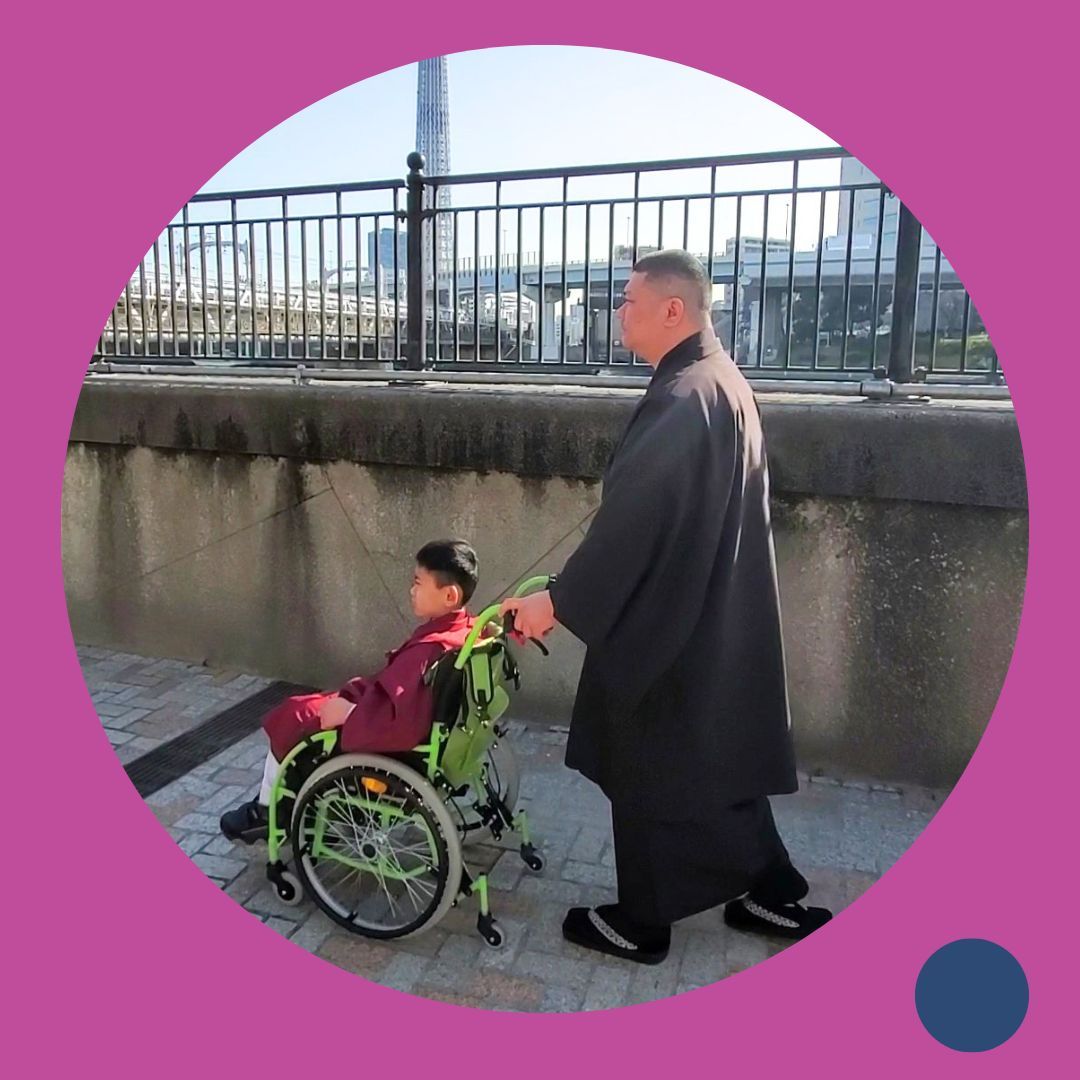
Is Japan wheelchair-friendly?
We share our real family travel experience across Tokyo, Kyoto, Osaka, Shizuoka and Nara, with practical accessibility tips.
Before our trip, I typed this exact question into Google:
“Is Japan wheelchair-friendly?”
Traveling as a family is one thing. Traveling as a family with a wheelchair adds another layer of planning. We weren’t just thinking about sightseeing — we were thinking about lifts, ramps, toilets, transport connections, energy levels, and whether daily logistics would feel overwhelming.
After spending 24 days in Tokyo, Kyoto, Osaka, Shizuoka and Nara between Jan-Feb 2026 — here is our honest experience.
Short answer?
Yes — Japan is far more wheelchair-friendly than we expected. But it does require some planning.
✈️ Airports: Smooth and Supportive
We flew Japan Airlines, so it was direct 10 hour flights from Melbourne to Tokyo, Narita Airport both ways. From the moment we landed, the assistance was organised and respectful. Airport staff were helpful and attentive. Boarding and disembarking were well-coordinated, and accessibility services felt efficient.
That set the tone for the whole trip.
🚆 Trains & Stations: Surprisingly Impressive
Japan’s train system looks intimidating — especially in major cities — but accessibility support is excellent.
In cities like Tokyo and Osaka:
- Most major stations have lifts.
- Station staff provide portable ramps.
- If you inform them of your stop, they call ahead so staff are waiting at your destination.
Even on longer journeys, the system felt designed to support mobility needs rather than treat them as an afterthought.
The only challenge? Some stations are huge with multiple entry/ exit points. In places like Tokyo, be prepared for long distances between platforms — lifts can sometimes be tucked away and small (fits 1 wheelchair and 2 other people).
But overall, the support was consistent and reassuring. I'll go in more detail in my next blog post on trains.
🏙️ Sidewalks & Streets
Tokyo & Osaka
Very manageable. Pavements are generally smooth, with tactile paving and curb cuts at crossings. Busy, yes — but accessible.
Kyoto
More traditional areas mean narrower streets and slightly uneven pathways. Still doable, but expect slower pacing in historic districts.
Nara
Open spaces made movement easier, especially around park areas, but watch out around deers. Some older paths near temples may require extra care.
Shizuoka
Quieter, less crowded, and surprisingly comfortable to navigate. We found it less overwhelming compared to larger cities, so it was perfect to visit in-between the larger cities.
🚻 Public Toilets: A Huge Win
This was one of our biggest concerns before traveling.
Japan exceeded expectations.
Accessible toilets are:
- Widely available in train stations
- Common in department stores
- Found in all tourist attractions
Tips: toilets in department stores and train stations were cleaner than public toilets on the streets or historic places.
Many include spacious layouts, support rails, and thoughtful design.
🏯 Tourist Attractions: Manage Expectations
Not every historical site is fully accessible — and that’s understandable given Japan’s preservation of ancient architecture.
- Modern attractions are usually well-equipped.
- Older temples and shrines may involve gravel paths, slopes, or steps.
- Staff are often helpful if you ask.
We learned to:
- Check ahead when possible.
- Prioritise energy.
- Be okay skipping certain stair-heavy areas.
Traveling with a wheelchair naturally slows you down — but in Japan, that slower pace actually felt beautiful, because we were exploring anyway.
⚠️ What to Plan For
- Large stations = long walking distances.
- Some older attractions have unavoidable steps.
- Avoid peak hour trains
- Build rest time into your days.
Japan is accessible — but it rewards preparation.
Final Verdict: Would We Do It Again?
Absolutely.
Traveling through Tokyo, Kyoto, Osaka, Shizuoka and Nara with a wheelchair was definitely worth the trip.
If you are hesitating to book because you’re unsure whether Japan can accommodate your family’s mobility needs, I hope our experience gives you confidence.
With thoughtful planning, patience, and flexibility, Japan is not just wheelchair-friendly.
It is welcoming.
We've posted some videos here: https://www.instagram.com/mommyisstilllearning

For more information about accessibility, My CP Guide hosts a variety of information resources. Browse the Accessibility section on My CP Guide to find other relevant resources.