
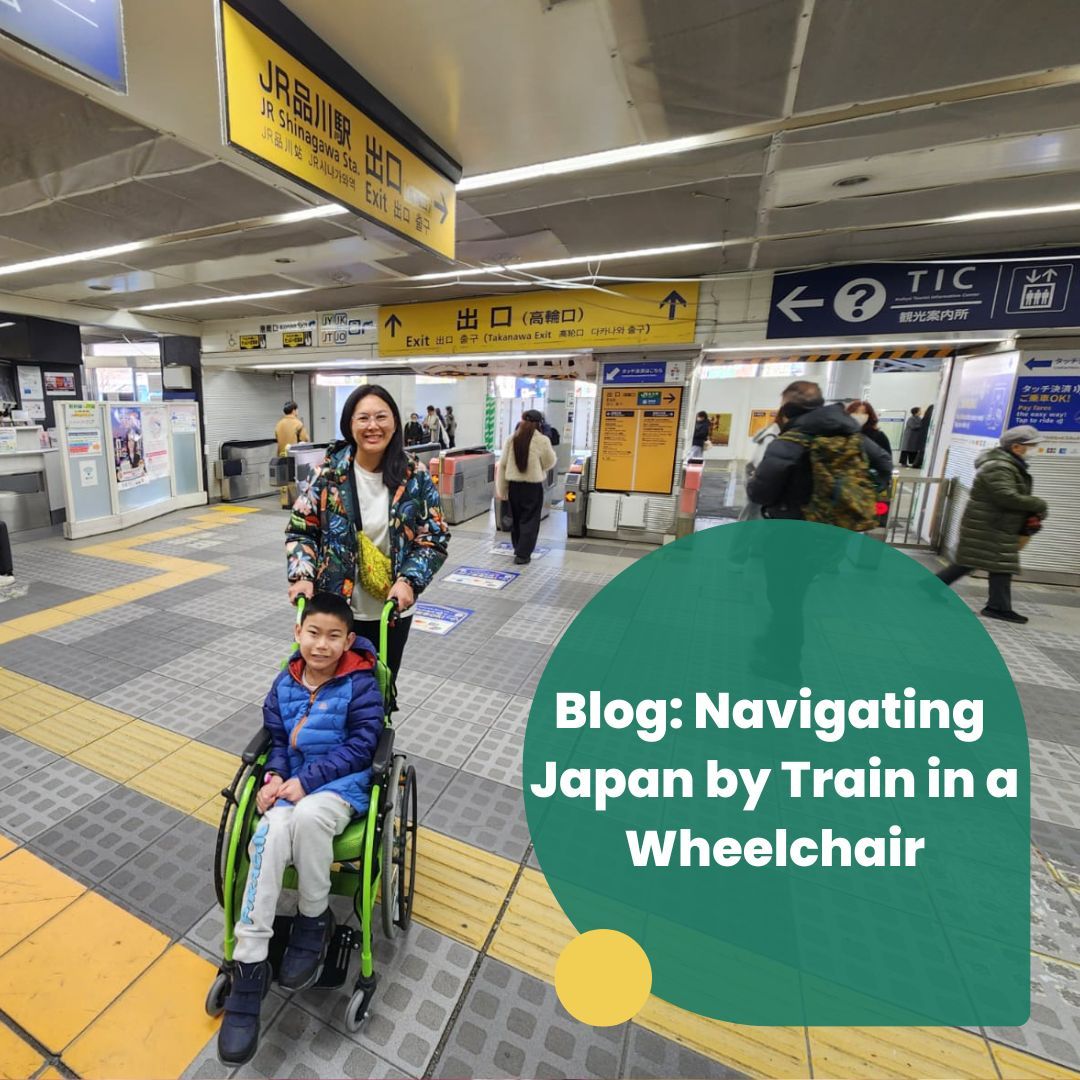
Japan by Train in a Wheelchair: How to Plan, Board, and Navigate JR Lines & the Shinkansen
Navigating Japan’s trains with a wheelchair: practical tips on planning, station staff assistance, boarding ramps, JR lines and the Shinkansen.
Before visiting Japan, the train system was the part that intimidated us most.
The maps looked complicated.
The stations looked enormous.
The crowds looked overwhelming.
Traveling with a wheelchair adds another layer of planning — and Japan’s rail network can look daunting from the outside.
But after experiencing it firsthand, I can confidently say:
Japan’s train system is one of the most organised and supportive systems we’ve ever used as a family.
Here’s how it actually works.
1️⃣ Planning Makes Everything Smoother
We quickly learned that Japan rewards preparation.
Before each travel day, we:
- Checked our route the night before
- Allowed extra transfer time
- Avoided peak hour where possible
- Identified lift locations in larger stations
One small feature that made a big difference?
When using Google Maps, make sure to select the “Accessible” route option. This helps identify step-free entrances, lift access and smoother transfer paths. It significantly reduced guesswork for us.
Major stations in cities like Tokyo and Osaka are extremely well-equipped — but they are big. Sometimes lifts are located at specific ends of platforms, so building in buffer time reduces stress.
Planning didn’t make things rigid. It made things calm.
2️⃣ Station Staff Assistance: Incredibly Organised
This was the biggest surprise for us.
At almost every station, there are clearly marked service counters. When we approached staff and informed them of:
- Our destination
- Our train time
- That we were traveling with a wheelchair
They immediately coordinated assistance.
Staff would approach us on the platform and gently check if we needed a boarding ramp. Even when we declined, they would remain nearby as the train arrived, ensuring everything was safe and smooth.
And once we boarded, they frequently stayed on the platform until the train departed — simply to make sure we were settled and okay.
It never felt intrusive.
It felt thoughtful.
Even more impressive, staff regularly called ahead to the destination station. When we arrived, someone was already waiting.
The system is structured. Quietly efficient. Deeply reassuring.
3️⃣ How to Request a Boarding Ramp
This sounds complicated, but it’s actually simple.
When you speak to station staff, just indicate you need assistance boarding with a wheelchair. Even with limited Japanese, staff understand quickly. You can say:
“Wheelchair, please.”
They bring out a portable ramp and position it securely between the platform and train. Boarding takes less than a minute.
On arrival, another staff member will be waiting with a ramp at your destination.
4️⃣ The Punctuality Is a Gift
Japan’s trains are famously punctual — and when traveling with a wheelchair, this becomes incredibly helpful.
Because trains depart and arrive on time:
- You can plan transfers confidently.
- Staff know exactly when to be waiting.
- There’s less uncertainty and rushing.
When traveling between cities like Tokyo and Shizuoka, this precision made long-distance travel feel manageable rather than stressful.
5️⃣ The Shinkansen (Bullet Train)
Taking the Shinkansen was one of the highlights.
Many Shinkansen trains:
- Have designated wheelchair spaces
- Offer accessible toilets
- Provide smooth boarding with staff ramps
Seats can be reserved in advance, which we highly recommend for peace of mind.
Remember to buy a bento box before boarding. They have so many options!
Despite traveling at high speed, the ride felt incredibly smooth — stable and comfortable.
6️⃣ Local Trains & JR Lines
We frequently used lines operated by Japan Railways Group (JR) and local trains in major cities. They often have:
- step-free access
- Clearly mark priority spaces
- Provide staff support when needed
Some older rural stations may have limited lift access, but staff consistently offered alternatives or assistance.
Even in busier areas like Nara during tourist hours, the system remained calm and structured.
So… Is It Overwhelming?
At first glance? Yes.
But once you understand the rhythm of how it works, Japan’s train system becomes predictable — and that predictability is reassuring.
The staff are trained.
The timing is precise.
The ramps are ready.
The communication is clear.
What looks intimidating from the outside is actually one of the most supportive transport systems we’ve experienced.
Our Honest Advice
- Use Google Maps’ Accessible route option
- Plan ahead, but don’t overthink it
- Ask for assistance — it’s normal and expected.
- Allow extra time in large stations.
- Avoid peak hour when possible.
- Reserve Shinkansen seats early.
Most importantly - don’t let fear of the train system stop you from visiting Japan.
With the right preparation, navigating Japan’s trains with a wheelchair is manageable.

For more information about accessibility, My CP Guide hosts a variety of information resources. Browse the Accessibility section on My CP Guide to find other relevant resources.
You can follow more of Audrey’s and Chandler’s cerebral palsy journey by visiting their Instagram page: https://www.instagram.com/mommyisstilllearning
