

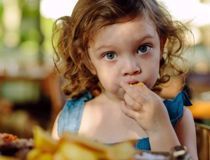
All children can be fussy eaters. Particularly during the ages of 3-6 years, children can begin to refuse foods, changing their minds from one day to the next. It may be because of the taste, texture or the effort and concentration required for them to feed themselves.
If you have a child with CP, eating and drinking can present extra challenges. This is because CP can affect the way face muscles contract, opening and closing of the mouth, and the movement of the lips and the tongue. Saliva control can also be an issue. Some children with CP may also have difficulty with swallowing (called dysphagia).
CP can also affect fine motor skills, so your child may not be able to use cutlery or to hold a cup. They may also suffer from gastroesophageal reflux (where acid from the stomach rises into the esophagus/food pipe) which makes eating uncomfortable or painful.

It’s important that children with CP are monitored regularly for eating and drinking difficulties, as chest infections (from accidentally breathing food into the airway) can sometimes happen. Early intervention is important to prevent any problems from getting worse.
If you are concerned about whether your child is getting enough nutrition, talk to your healthcare team. They can assess your child and give you some strategies to improve their eating and drinking. They may also refer you to other health professionals who can help, such as a physiotherapist, occupational therapist or speech therapist.
Sometimes, problems with eating and drinking can be improved by adjusting your child’s seating and posture position, while issues such as reflux can be controlled by medication.
Some children with CP will not be able to eat orally. They may require feeding through a tube, which is called percutaneous endoscopic gastrostomy (PEG) feeding.
Sometimes, PEG feeding is needed to overcome temporary digestive issues, or it may be needed over a longer time. Children are still getting the nutrients they need if they require PEG feeding.
Your healthcare team will support you to make sure you are giving your child the right type and amount of food through the tube, as well as how often, so that your child can grow and develop.
You can find out more about eating and drinking in the below section.