

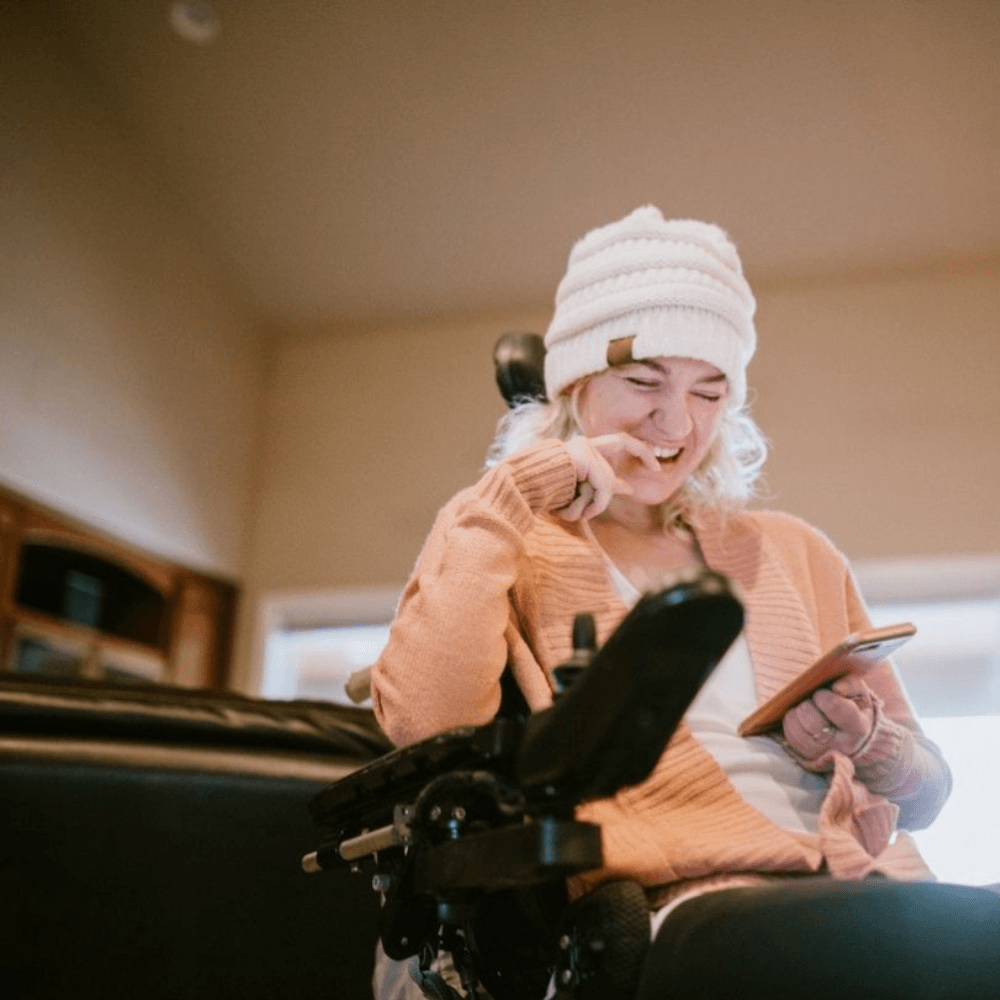
Older children and teenagers with CP may experience spasticity (stiffness) or weakness in their breathing muscles, reduced mobility, spinal abnormalities and poor posture, which can all contribute to a reduced and less-efficient lung function. This means they are more prone to respiratory issues, such as aspiration (food or drink going down the wrong way), upper respiratory infections and pneumonia.
Pneumonia, caused by a virus or bacteria, is a serious lung infection. It reduces the amount of oxygen able to reach your system due to the small airways in your lungs becoming clogged with mucus.
If your older child appears to be having any breathing difficulties, please seek medical advice immediately.
It is very important that older children with CP continue to be monitored for any respiratory issues. As a parent, you may feel you can tell if your child is having problems, but they can be hard to detect, particularly if the child struggles to communicate effectively. Being aware of your child’s breathing patterns can help alert you to issues when they change.
It is crucial to seek medical advice early for any breathing issues, especially respiratory infections, so that treatment can begin and prevent problems getting worse.

There are things you can do to support your older child’s breathing. With the right support, monitoring, management and advice from the healthcare team, breathing issues can be managed effectively.
Types of health management can include:
- oxygen therapy, using devices such as nebulisers, inhalers, or incentive spirometry (to produce slow deep breaths)
- breathing exercises, including learning to use the diaphragm to breathe, and expanding the ribs
- supporting the respiratory muscles, using various beathing devices
- exercise programs, such as swimming and gym work to strengthen muscles involved in breathing and coughing
- speech therapy, to help control breathing and managing swallowing issues affecting respiratory health.
Throughout the school years, it is important that young people with CP learn what to do if they are having difficulties with their breathing. Make sure that teachers are aware of their condition, and let them know how they can best support their student with CP.