Supporting First Nations people with cerebral palsy
What does culturally safe and genuinely inclusive support look like for First Nations people with cerebral palsy?
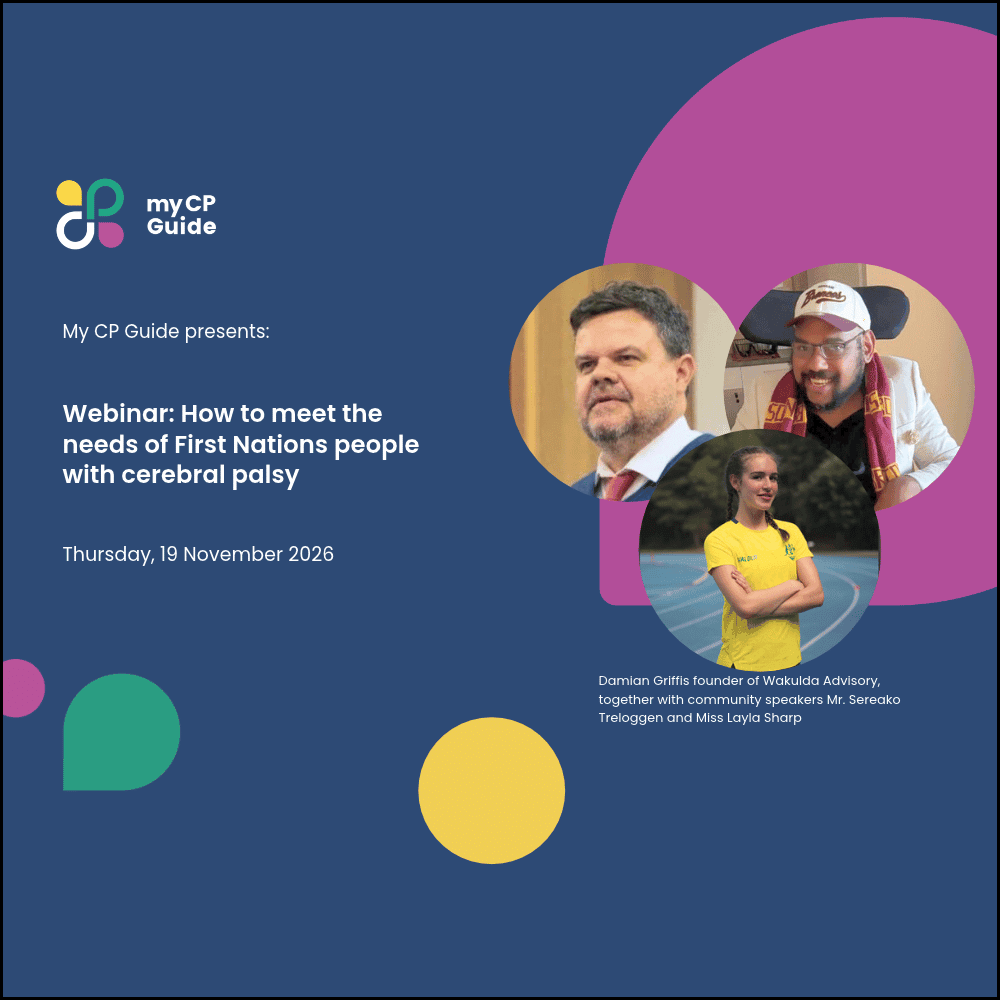
That was at the heart of our recent My CP Guide webinar, which brought together Damian Griffis, Sereako Stephen, Layla Sharp and Wade Costley for an open conversation about disability, culture, inclusion and the changes that are still needed.
The webinar is part of My CP Guide’s work to develop more culturally relevant and useful information and resources for First Nations people with cerebral palsy, their families and communities.
Disability, culture and community
Damian Griffis, Founder and Principal of Wakulda Advisory and former CEO of First Peoples Disability Network Australia, began by asking participants to think differently about how disability is understood.
He explained that many First Nations languages do not have a directly comparable word for “disability”. Rather than defining someone by a diagnosis or impairment, traditional understandings can focus more on the person, their place in community and what they need to participate.
It was an important starting point for the discussion. Cultural safety is not simply about making existing disability services more welcoming. It also requires listening to First Nations perspectives and recognising that Western understandings of disability are not the only way of seeing or experiencing disability.
Listening to lived experience
Two of the strongest contributions came from Sereako Stephen and Layla Sharp, who shared their experiences of living with cerebral palsy.
Sereako Stephen, a Torres Strait Islander man with cerebral palsy, spoke about the importance of family, education and having people around him who supported his goals. He reflected on his experience growing up with cerebral palsy and on wanting to encourage other young people to accept people with disability and help improve their lives.
Layla Sharp, a proud Biripi and Darug woman, spoke candidly about the discrimination and barriers she experienced throughout her education.
She described having to continually advocate for appropriate adjustments, including during her HSC, and reflected on how difficult navigating these systems can be when people do not have someone beside them to help advocate for what they need.
Their experiences reinforced an important message from the webinar: people with cerebral palsy should not have to continually fight systems to receive appropriate support.
Information needs to reach people where they are
Access to the right information was another major theme.
Damian Griffis spoke about families receiving a brochure following a diagnosis, but not necessarily having someone sit down with them and explain what cerebral palsy might mean for their child, their family or their community.
Written information remains important, but information alone is not enough.
As Damian Griffis explained, meaningful engagement means going into communities, meeting people where they are, listening and building relationships. For organisations, this requires moving beyond a one-size-fits-all approach to information and service delivery.
This is particularly important for people living in regional and remote communities, where access to disability, health and other supports can be much more limited.
Start with listening and humility
When asked what services can do differently, Damian Griffis returned to two things: humility and listening.
Organisations need to take the time to understand the community they are working with and recognise that trust and strong relationships cannot be built overnight.
He also challenged organisations to look beyond what they see on the surface. What might initially be interpreted by a service as disengagement or neglect may have much more complex causes, including poverty, lack of accessible services, previous experiences with systems or fear of judgement.
Layla Sharp also spoke about the importance of listening to the person themselves and taking their concerns seriously, particularly when navigating diagnosis, healthcare and support systems.
Standing beside people, not speaking for them
Towards the end of the webinar, Wade Costley asked what people should most understand about supporting First Nations people with cerebral palsy.
The answer was not another program or service.
It was solidarity.
Damian Griffis spoke about the need for people to stand beside First Nations people with disability, to listen, learn and become effective allies and champions. Wade Costley reflected that solidarity provides the foundation from which greater equity and inclusion can be built.
It was a fitting way to end a conversation that repeatedly returned to the importance of relationships, lived experience and working together.
Continuing the conversation
This webinar is one part of a broader My CP Guide project to develop culturally appropriate information for First Nations people with cerebral palsy, families and communities.
A First Nations Advisory Panel has been established to help guide the content, language, format and dissemination of the new resources, with fact sheets, lived-experience video content and other resources being developed.
Importantly, the work is not about simply taking existing cerebral palsy information and adding First Nations imagery. The resource development approach recognises that cultural relevance needs to be reflected in language, family and community perspectives, lived experience, access barriers, how services are discussed and how information reaches people.
As the webinar made clear, the best resources will come from continuing to listen to First Nations people with cerebral palsy and their families and ensuring their voices help shape what comes next.
Watch the webinar
The webinar was recorded and will be available to watch on demand through My CP Guide.
You can also explore information and resources at My CP Guide and sign up to the My CP Guide newsletter to hear about new resources, webinars and updates.