
What are cerebral palsy registers, and why are they important?
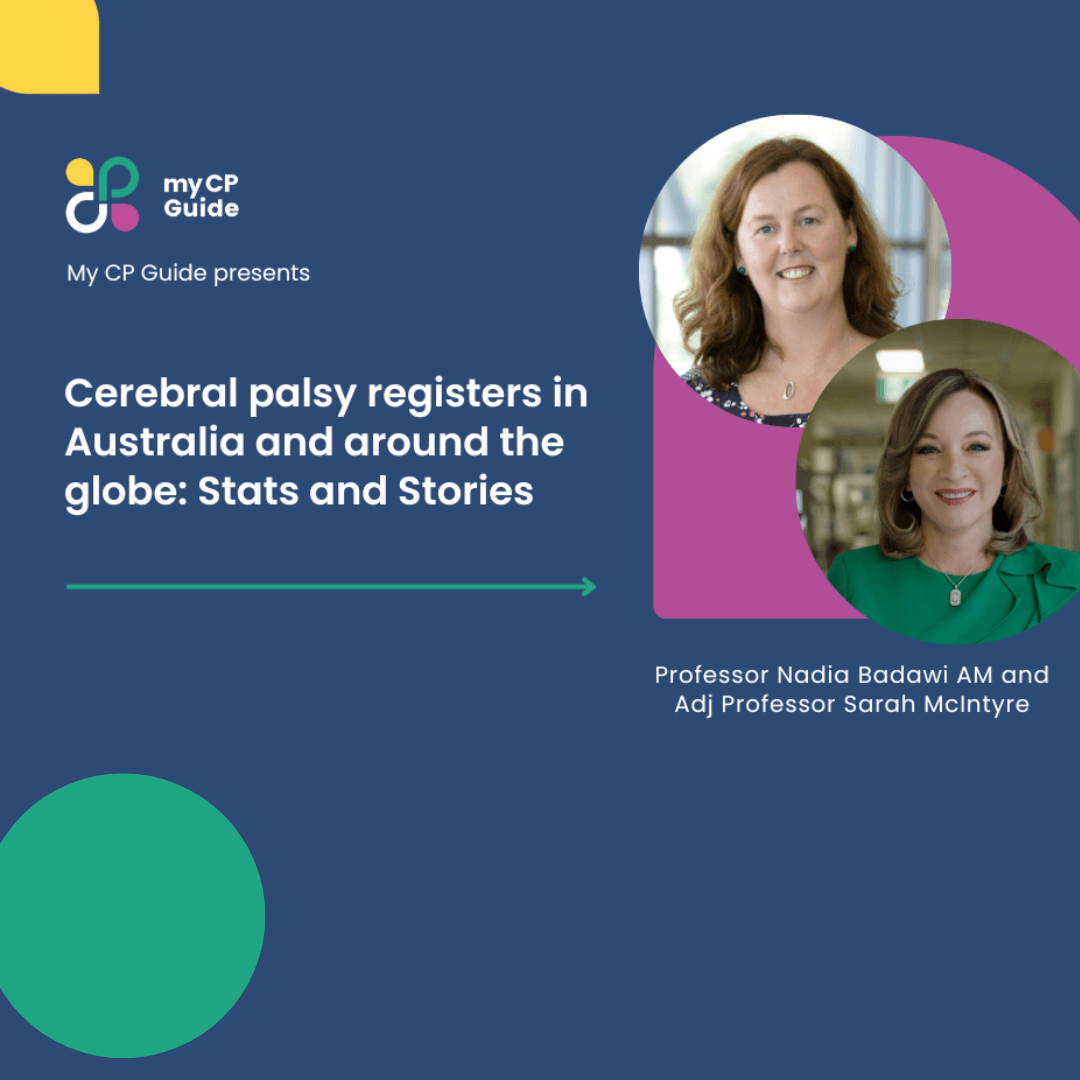
In a recent My CP Guide webinar, Professor Nadia Badawi AM, a global leader in the research of newborn brain injury and cerebral palsy, and Adjunct Professor Sarah McIntyre, Program Lead for Epidemiology at Cerebral Palsy Alliance and also Chair of the Australian Cerebral Palsy Register, provided an in-depth look at cerebral palsy registers and how the registers help drive research and improve services for the CP community worldwide.
What are cerebral palsy registers?
Cerebral palsy registers are more than just databases—they are engines for change. They collect and store essential data about individuals with CP, helping researchers, clinicians, and policymakers understand causes, trends, and outcomes. These insights have led to groundbreaking improvements in prevention, early diagnosis, treatment, and long-term support.
The Australian Cerebral Palsy Register (ACPR) includes data uploaded from the CP registers of each state and territory in Australia.
Why cerebral palsy registers matter
The Australian Cerebral Palsy Register plays a vital role in providing key insights into the CP population across the lifespan for researchers and clinicians. Some of these insights include:
• Interventions in the Perinatal Period: The ACPR has shown that at least 50% of babies diagnosed with CP spent time in Neonatal Intensive Care Unit (NICU) or Special Care Nursery (SCN).
• Prevention Success: Register data has shown a 40% reduction in CP rates in Australia, thanks to interventions like single embryo transfer in IVF and the use of magnesium sulfate for preterm births.
• Genetics and Infection: New research reveals that up to 30% of CP cases may have a genetic basis, and infections like cytomegalovirus (CMV) during pregnancy are significant contributors.
• Prevalence and Trends for Aboriginal and Torres Strait Islander Children with CP: The register includes 514 children with CP born to Aboriginal and/or Torres Strait Islander mothers, with 72% of the children living in urban or regional areas, and 1 in 5 living in remote/very remote socioeconomically disadvantaged areas.
• Early Detection: Despite medical advances, only 21% of children are diagnosed before 6 months, highlighting the urgent need for improved early screening and intervention.
• Participation and Mental Health: Studies using register data have explored emotional regulation, mental health, and community participation, leading to tailored interventions like mindfulness programs for adults with cerebral palsy.
Global Collaboration
Australia’s leadership has inspired the creation of CP registers in 21 countries, and numerous collaborations with the Surveillance of CP in Europe (SCPE), the Global Low & Middle Income CP Register (GLM-CPR) and the New Zealand CP Register (NZCPR). These partnerships help address disparities in diagnosis, care, and outcomes—especially in low- and middle-income countries where CP rates are higher and services are limited.

Get Involved
Your participation helps drive research, advocacy, and better outcomes for all. If you or someone you know has cerebral palsy and isn’t yet on the register, you can find links to state and national CP registers here: Cerebral palsy registers | My CP Guide
You can also learn more about cerebral palsy registers by watching the replay of the webinar here: Webinar: Cerebral palsy registers in Australia and around the globe | My CP Guide