
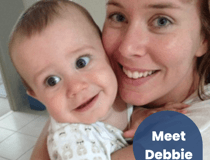
Debbie, an adult with CP, shares the story of her experience with pregnancy, birth, and raising children
It’s important remember that every parent faces unique challenges, and with the right support and resources, individuals with cerebral palsy can provide loving and nurturing environments for their children.
I was born at 24 weeks and have had cerebral palsy right side hemiplegia my entire life. It affects the right side of my body, and I use my left side for everything.
Things weren’t easy but I found a way to get through and by my teenage years—I had worked out a way around most things in life to become as independent as I possibly could.
I met a wonderful guy in my first year of University, who wasn’t put off by having to cut up my food on our first date or perturbed by needing to help me with zips or tying up my shoes. Life was great.
We got married eight years later and happily I found myself expecting by our first wedding anniversary.

Pregnancy
Most health professionals I encountered assumed I’d need a caesarean as they weren’t confident that I’d be able to give birth naturally. None had ever had a patient with physical disability before and I had never had a baby before, so I had no idea what I was capable of.
I ended up meeting with an obstetrician who freely told me he had never had a patient with a physical disability before.
When I asked the obstetrician whether I could do it naturally, he said "It seems like you've managed to find a way through most challenges already—I don't see why this would be any different."
He agreed that we would give it a go and if things weren’t working out eight hours in, we’d pivot.
My waters broke at 38 weeks while in Brisbane CBD with my husband. Being a first timer, I had wrongly just assumed things would go overtime and that having your waters break spontaneously was something that only happened in the movies.
Things went textbook to plan and within six hours I was holding a newborn baby boy. My disability didn’t get in the way, other than the fact that I laboured entirely laying on my back in the hospital bed—as I didn’t have the body strength to coordinate standing, kneeling, or walking during contractions.
The Newborn Phase
I remember the entire time I was in the hospital I was too terrified to try and pick him up myself. I’d wait for nurses or my family members to hand him to me.
This was about the exact same time I had the realisation of ‘how am I going to take care of a baby?’. I realised I’d been able to find ways around my own daily life, but surely that there was no way that could apply to taking care of another human being.
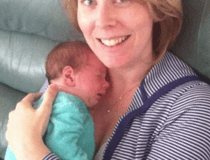
I didn’t change any nappies while in hospital and nurses overwhelmingly addressed my husband in explaining how to look after our baby. With each shift change I’d inevitably get asked by each next nurse ‘are you going to have people that can help you when you get home’. By the time we got home, I was absolutely terrified.
During my midnight and 3am feeds, I’d sit in a darkened lounge room scrolling through the internet looking up information around how to parent with a physical disability.
I didn’t find anything and certainly none of the baby books I had addressed the topic.
As weeks went by, my husband went back to work and I found that in my quiet moments without anyone around, through much trial and error I could pick up my baby by myself one handed. It didn’t look elegant – but he was entirely safe and supported.
I realised I couldn’t do up those clip studs on any of his baby onesies—so I pivoted to zip suits and the understanding that every time I was changing him that it would simply take as long as it takes. I wasn’t quick or streamlined in my inelegant style, but I found a way to get it done. Nappies too—given the space and opportunity to try in my own methods—I could change nappies one-handed.
Just as I had done all those years ago, given the space and ability to try things my own style, I could make my own way in parenting.
Community Access
As any new parent can attest, leaving the house with a new baby is a circus in itself. Community access was one thing that I didn’t manage to crack independently until my boys were much older. The reason being that I struggled with trying to put them into baby capsules and do up all those clips and buckles. I found a one-handed collapsable stroller that I could man handle in and out of my car, that I could manoeuvre once someone put him safely in.
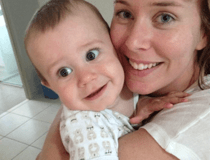
I felt nervous and embarrassed about the way that I held my babies when I was out in public, as it looked strange. Therefore for much of my time in the community I wouldn’t pick them up. I’d wait for others to hand them to me. I still do this currently when visiting friends and family who have a newborn. I’ll go and find a chair and wait to be handed the baby—always and only while sitting.
Getting Older
As my baby got older he instinctively would hold on when he was getting carried by me. The way I carried him one-handed was his preferred position to then be held by everyone, and we’d get comments about his incredible grip. It’s amazing to me how they adapt better than we do!
Next Time Around
20 months later I had my second son and this time I felt a lot more confident in the hospital environment. I was picking him up one-handed straightaway, showing nurses the method I would be using to change nappies and my preferred breastfeeding styles.
Third Time's The Charm
By the time my third son came, I felt very self-assured about my abilities and knowing my limitations in caring for him and his brothers. I still struggled with community access and I generally fatigued very quickly but was a lot more self-assured and confident in myself as their Mum.
As They Get Older
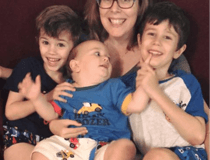
My three boys are my greatest achievements and as they’ve gotten older and independent, they instinctively have followed the help and assistance their Dad gives me. I don’t ask them for help, they’ll just grab my dinner and start cutting it up or get me a drink or start doing up my zips or shoes. It’s just a normal part of everyday life.
My hope before I had kids was that they wouldn’t be embarrassed of me due to my disability and I can sincerely and confidently say they are proud of me and love me just as I am.
If you have found this blog helpful or would like to reach out, please don’t hesitate to contact me via LinkedIn: Debbie Heron - LinkedIn

For more information about parenting as a person with disability, My CP Guide hosts a variety of information resources, such as Parenting with a physical disability from the Raising Children Network. Search "parenting" on My CP Guide to browse other relevant resources.