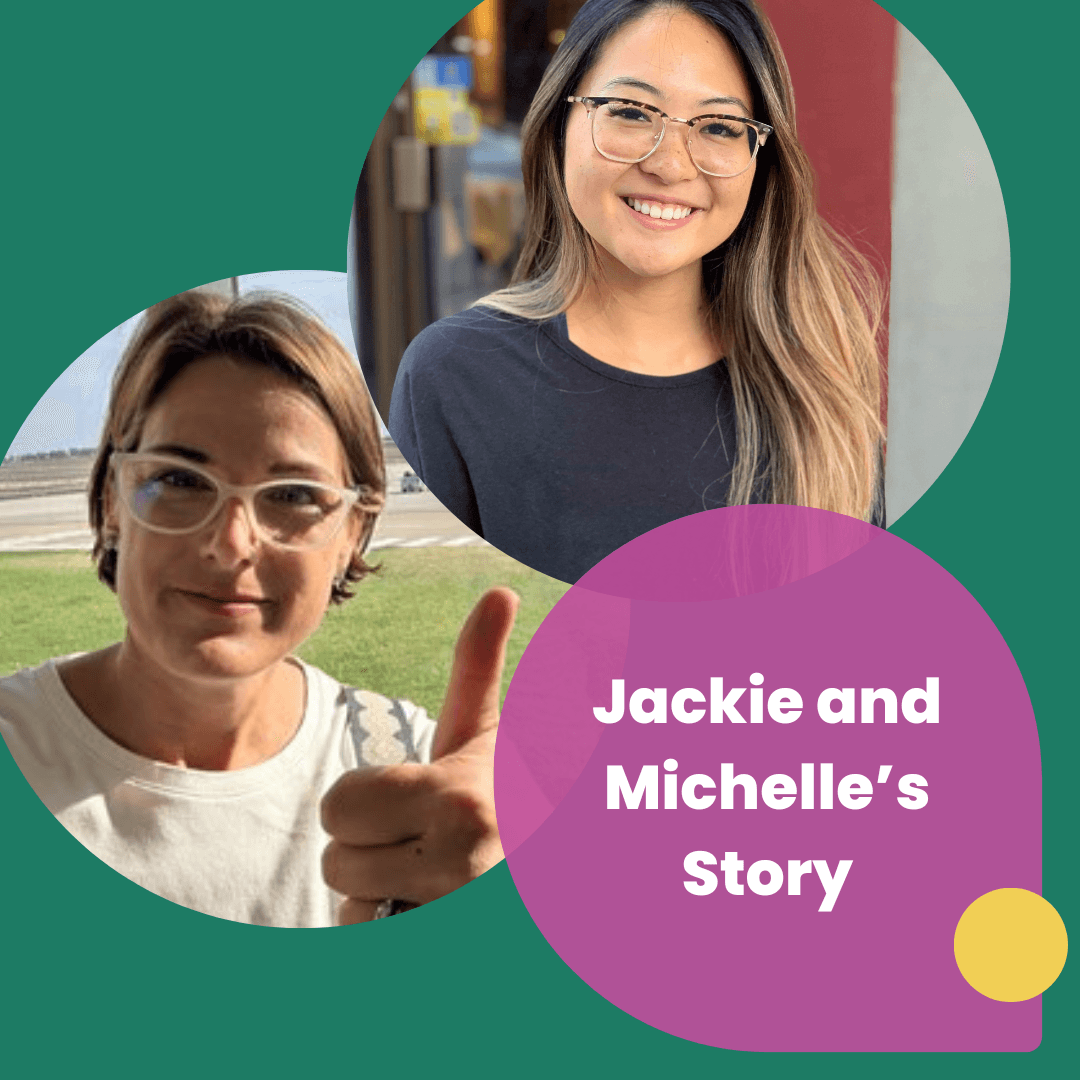
Michelle and Jackie share their story of working with CP-Achieve's consumer research program
What does authentic consumer involvement in research really look like? For Michelle, a consumer research partner with a child with cerebral palsy, and Jackie, a PhD candidate, it involves sharing decision making, equally benefiting from the experience, being flexible and overcoming challenges.
Getting involved in a research project’s working group
Jackie established a working group to design an online health literacy module, titled CP-Pathfinding: Your health. This working group was involved in both project design and implementation. Michelle was one of the consumer research partners involved in the working group.
“Involving consumers in the working group was core to the project design” Jackie stated. “I wanted consumers to share decision making for the Your health module. I strongly believe their involvement ensured that the research outputs were not only inclusive but also relevant to the people that they aim to serve: the end-product will be fit for purpose”, she explained.
Michelle was excited to get on board, explaining, “When I saw the project description, I could tell it was a good match for my interests. I have a science and teaching background, along with experience navigating the healthcare system for my daughter with cerebral palsy. I am very committed to ensuring that my daughter’s transition to adult healthcare services is well supported, so working on these materials is one way to ensure that happens”.
Working group roles
“Consumer research partners on the working group, like Michelle, had the same role as other members of the research team – we worked together on an equal footing”, explained Jackie. “Everyone equally influenced outputs, had an equal say and equally valued contributions”.
Michelle worked alongside other consumer research partners and clinicians in fortnightly working group meetings to develop, review and adjust module content. They also reviewed external feedback (from consumer advisors) using a consensus process to decide which points would be adopted in the module.
Michelle explains her role, “My key contribution as a member of the working group has been the analysis of the supports and content that are useful for inclusion in this resource. I also proofread and edited the document, adjusting the language, style and delivery, and identifying gaps in the content”.
Consumer Impact
Michelle and other consumer research partners had significant impact on the Your Health Module. According to Michelle, “I suggested including sex, sexuality and gender identity in the module. I also wanted to see the use of empowering language that reflects the whole person, not simply their diagnosis. I’ve got a 13-year-old girl who is a full-time wheelchair user and she wants to be a mum and she wants to have a boyfriend. There is no point in developing all this medical content in the Your health module, if it doesn’t support her to have a good life”. Although the initial reaction felt a little awkward, the working group went on to include these topics in the module.
The importance of flexible options for involvement
Consumer research partners often need flexible involvement options for research projects. “Medical and bureaucratic processes can impact consumers’ daily lives and allowing consumers to take breaks or reduce their level of involvement, where needed, helps support their involvement” stated Jackie.
Michelle provides an example. “September was a tough month for me due to my daughter’s surgery, and I lost track of everything. I missed a couple of meetings and felt guilty about it. I even considered stepping away”, she explains. “However, Jackie was understanding. She told me, ‘That’s OK. Come back when you’re ready,’ and expressed gratitude for everything I had done to date. Now that I’m back, she’s so thankful and appreciative of whatever I can do”.
Michelle also pointed to the importance of researchers that listen and value consumer research partner perspectives. “Jackie was very patient on the calls”, she stated. “She gives you a lot of time to respond and to think. She’s a very good facilitator of the conversation. She allows everyone to have their say and then draws in people who have not contributed as much. When you do speak, you feel heard. I definitely felt cared for and nurtured along the way”.
Benefits of consumer involvement
For Jackie, the key benefit of involving consumers in the research was “the diversity of ideas presented by the group and the knowledge that the resulting Your health module would be fit for purpose”.
Michelle also benefited, in different ways. She explains “The key benefit for me was a sense of personal empowerment and contributing to something outside of my family and feeling like someone values what I have to say. I also made some new connections with other consumers that led to discussions about other research opportunities”.
Challenges
The project wasn’t without challenges. According to Michelle, “We faced time constraints with both consumers and researchers feeling the pressure. Consumer research partners had to learn to keep emotions in check to influence the working group effectively. We also needed to slow down to accommodate members who required more time to respond”. She also noted that some consumer research partners struggled with the medicalised views of disability from clinicians, feeling that these perspectives overlooked the character and individuality of people with disabilities.
Jackie also pointed to time pressures being a challenge, and how offering flexible options for involvement helped her manage these constraints, accommodating medical appointments and other stressors. “The time pressure actually made me more organised”, she stated. She explained how she overcame the challenge of a large working group, “Initially, the large volume of feedback from consumer research partners was overwhelming, but we managed it through consensus-building within the working group”.
This story is an edited version of Jackie and Michelle’s story featured in chapter 7 of CP-Achieve’s new consumer involvement resource, Navigating Consumer in involvement in health and disability research: strategies and stories from CP-Achieve, a centre for research excellence in cerebral palsy, which is designed to inspire and strengthen consumer involvement practice in health and disability research.

This story appears in Chapter 8 of Navigating consumer involvement in health and disability research, a resource designed to strengthen consumer involvement practice in health and disability research.
Read the full resource: Navigating consumer involvement in health and disability research