

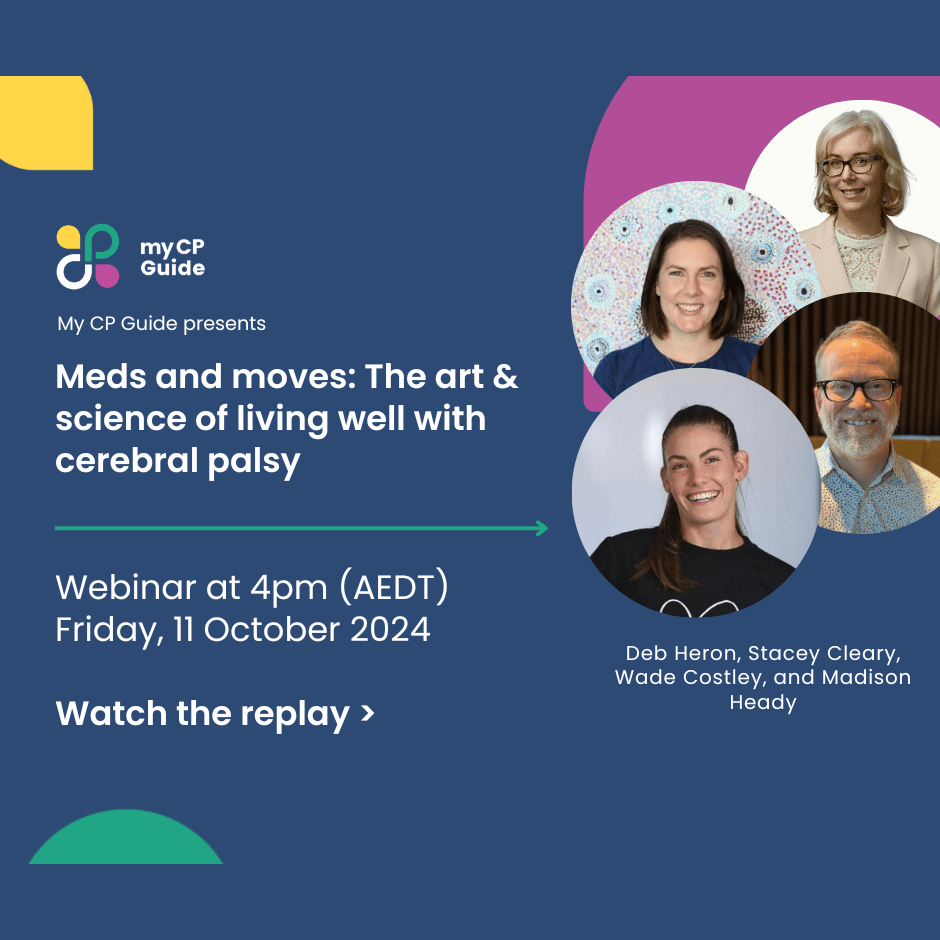
This blog post provides a recap of an insightful webinar from My CP Guide which explores individual experiences with medication.
Living with cerebral palsy often requires managing symptoms through a combination of physical therapy and medication. In a recent webinar, three adults with cerebral palsy—Madison, Debbie, and Wade—shared their personal experiences with medication and how it has impacted their lives.
Madison, 23, has ataxic cerebral palsy which affects her entire body, leading to uncontrollable spasms and shaking. As an active person, Madison has found that her symptoms worsen with physical activity, which led her to seek medical treatment. “Through the years, as my physical activity has tremendously increased, we also found that my spasms and shakiness worsened, resulting in extreme fatigue and other symptoms,” she shared. Her neurologist recommended a medication used to treat Parkinson’s disease, which was an unusual choice at the time for cerebral palsy patients. After trial and error, Madison discovered that the medication reduced her spasms, improved her energy levels, and allowed her to carry out fine motor tasks like making coffee and writing. However, the timing of the medication is critical. “It’s all about timing,” she noted, adding that if she doesn’t take it correctly, she may experience fatigue and need a rest.
For Debbie, a mother of three from Queensland, managing pain has been a significant part of her journey with right-side hemiplegia. Over time, Debbie noticed a decrease in her energy levels and mobility, accompanied by pain in her arm, upper back, shoulders, and neck. This led her to seek new treatment options. After consulting with a specialist, she was recommended Botox injections—not for cosmetic reasons, but to address the muscle tightness causing her pain. “I thought, surely it can’t get any worse, so I’m just going to give it a shot,” Debbie said. Now, she receives Botox injections every three months, which has helped her mobility and posture significantly. “I can see my arm straightening out, my posture gets better, and I trip over less,” she explained. However, she emphasized the importance of continuing physiotherapy to counteract muscle weakening from the Botox.
Wade, a 54-year-old living in Melbourne, has spastic diplegia, which primarily affects his legs. For most of his adult life, Wade managed his condition without seeking medical treatment specific to cerebral palsy. However, after years of international travel and a demanding career, he noticed a gradual decline in his ability to walk. “One night, I was disembarking from a flight, and I just collapsed—my legs said no more,” Wade recalled. His doctor discovered that Wade’s leg muscles were in constant spasm and recommended a muscle relaxant called dantrolene. This medication has been a game changer for Wade, allowing his muscles to relax and improving his overall mobility. “It allows my body movements to become more fluid and reduces stiffness in my legs,” Wade explained. Like Debbie, Wade highlighted the importance of continuing physical activity to maintain muscle strength.
Each panelist shared how medication has improved their quality of life but also noted the challenges of finding the right treatment. Madison’s mother, Andrea, reflected on the overwhelming process of transitioning from paediatric to adult healthcare. “There wasn’t a lot of expertise with this medication for cerebral palsy, so it was quite a blind trial,” Andrea said. The family kept a journal to track Madison’s symptoms and medication schedule, which helped them manage her treatment effectively.
Debbie, on the other hand, wished she had more peer support earlier in her journey. “I kind of wish I’d met people like Maddie and Wade earlier. You can’t beat real-life experiences and being able to talk to people who get it,” she said. Wade echoed similar sentiments, noting that he started his medication in his late 30s and wished he had known about the options earlier.
Their collective experiences underline the importance of self-advocacy and open communication with healthcare providers. As Madison put it, “Try your hardest to advocate for yourself and remember that the doctors are there to help you live your best life.” Each panelist emphasised that while cerebral palsy is a lifelong condition, the right combination of treatment and support can help individuals live a fulfilling and active life.
Watch the replay of this webinar now on My CP Guide: Meds and Moves - The art & science of living well with cerebral palsy