
Living with cerebral palsy: what people with CP want others to know
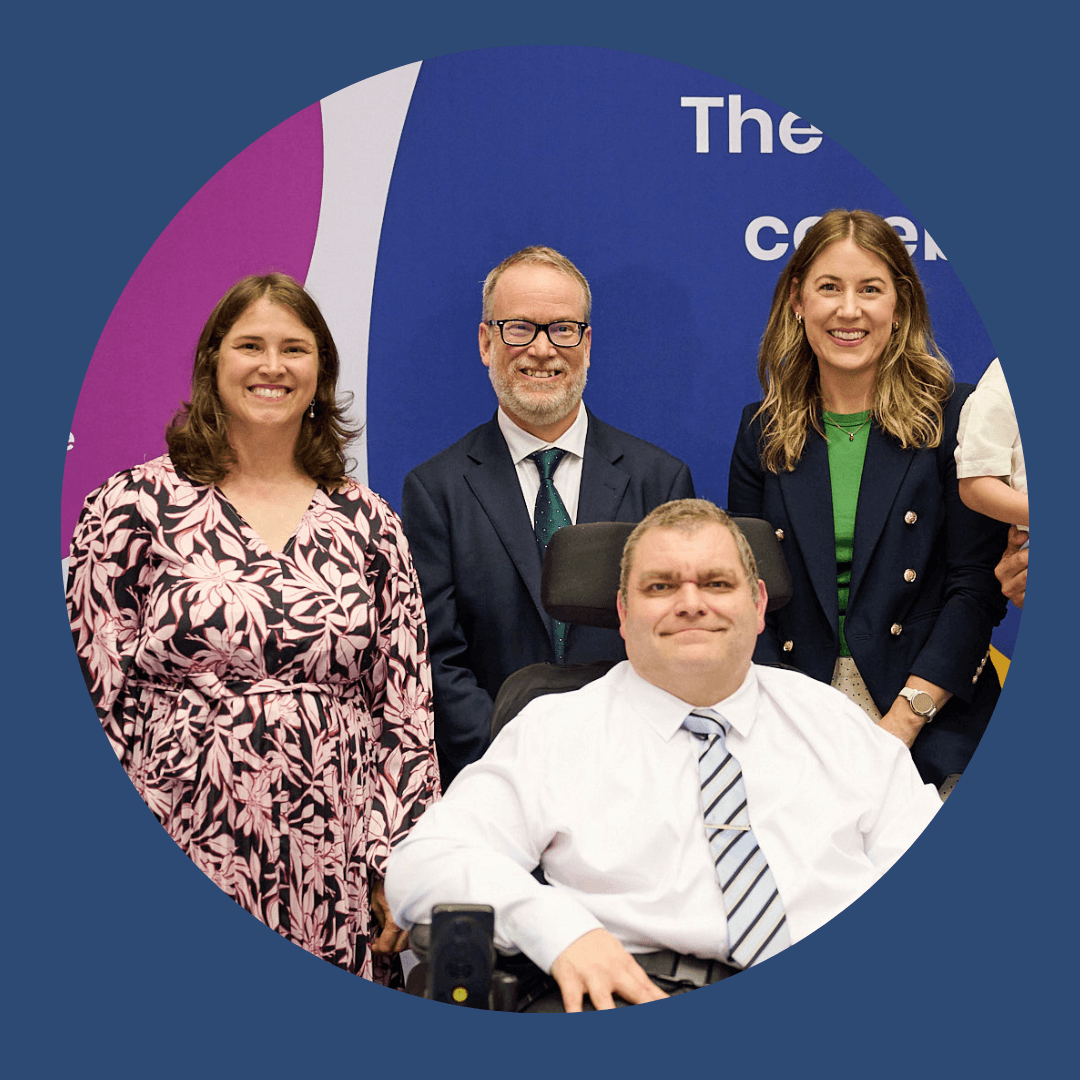
There is no single experience of living with cerebral palsy. At Parliament House in Canberra, people with CP and their families shared personal stories about childhood, adulthood, relationships, work, therapy and the support that has helped them pursue the lives they want.
The stories were shared at the launch of the Parliamentary Friends of Cerebral Palsy, a new bipartisan group connecting people with cerebral palsy and their families with members of Australia’s Parliament.
While everyone's experience was different, one thing came through clearly: having the right support and opportunities can make a real difference throughout life.
Finding your own path as an adult with cerebral palsy
Zane McKenzie, Chair of Cerebral Palsy Australia, spoke about how different his life looked before the NDIS.
Looking back around 13 years, Zane said:
I had some ideas about what I wanted my career path to look like. I wasn’t married with three boys. I didn’t ever think that those things would necessarily happen for me.
He described having big ideas but not being sure where to start.
Today, Zane is married with three children and has built a career that includes a senior role in the disability sector as well as chairing Cerebral Palsy Australia.
For Zane, access to the right support has been an important part of making those opportunities possible.
His experience is also a reminder that people's goals don't stop when they reach adulthood.
People with cerebral palsy may want to work, study, have relationships, raise families, participate in their communities or pursue entirely different goals. What matters is having the opportunity and support to make choices about your own life.
What the right support can change
Briar Tomkins, Deputy Chair of Cerebral Palsy Australia, shared a very different experience.
Growing up, Briar said she had limited interaction with other people with disability and found it difficult to access the support she needed. Before the NDIS, the cost also meant she could not always access ongoing therapy.
She described spending many years between bed and medical appointments, with limited interaction with the outside world.
Access to regular therapy made a significant difference.
I went from being in bed frequently hospitalised to having energy to look after myself and live independently. Thanks to the NDIS I am now well enough to work.
She has since been appointed Deputy CEO of a disability organisation and has been married for more than two years, things she told the audience she once did not think she would achieve.
Briar's experience also highlights an important point about cerebral palsy and therapy.
For some people, successful therapy isn't about continually improving or becoming less disabled. It can be about maintaining health, independence and the ability to keep doing the things that matter to you.
As Briar explained:
For many people with CP, it is about management and maintenance, not improvement.
Early support and everyday milestones
Naomi Fallon shared the experience of discovering that her son Charlie had cerebral palsy when he was nearly two.
After his diagnosis, Charlie was able to access therapy and support.
Naomi described seeing the impact of early intervention in very practical, everyday ways.
She also spoke about Charlie learning to write his name, something they had not known would be possible when they first began therapy.
When asked what she hopes for Charlie's future, Naomi's answer was simple:
Charlie is at preschool now and he can wield a pair of scissors, very much the same as all his other little friends at preschool. We just want him to be able to chase his hopes and dreams and have access to the same opportunities as all the other kids his age.
For families of young children with cerebral palsy, it can be difficult to know exactly what the future will look like.
Charlie's story is one example of why individualised support and opportunities to develop skills can matter.
Every child with cerebral palsy is different. Their strengths, challenges, goals and the support they need will be different too.
How cerebral palsy can become part of your story
Five-time Paralympic gold medallist Evan O'Hanlon OAM also spoke about growing up with cerebral palsy.
Evan was born with cerebral palsy affecting the left side of his body. He went on to have an extraordinary sporting career, supported along the way by his family, coach, physiotherapists, massage therapists, doctors and others.
But his reflection wasn't simply about sporting success.
Evan talked about the way cerebral palsy had influenced the direction his life took. His pathway through sport eventually led to experiences and relationships that became important parts of his life, including meeting his wife and having their family.
His story offers a different perspective on disability.
Cerebral palsy can bring challenges, and people may need support at different points in their lives. But CP is also one part of a person's identity and life story. There isn't one predetermined path that a person with cerebral palsy will follow.
Cerebral palsy is lifelong
One of the messages shared at Parliament House was particularly important for My CP Guide.
Wade Costley, Chair of Cerebral Palsy Australia's Lived Experience Advisory Panel, put it simply:
“CP is lifelong. CP does not stop when you turn 18.”
For children with cerebral palsy, much of the early focus can understandably be on development, therapy, school and early intervention.
But children with CP grow into adults with CP.
Adulthood can bring new goals and new challenges. Support needs can also change as people study, work, form relationships, live independently, participate in their communities and grow older.
Understanding cerebral palsy therefore means looking beyond childhood and considering the whole of a person's life.
Listening to people with cerebral palsy
Although the speakers had very different experiences, another common message emerged from the event: people with cerebral palsy need to have a voice in the decisions that affect them.
Zane summed this up with a phrase that has been important to the disability community for many years:
Nothing about us without us.
There is no single story of cerebral palsy.
Zane's experience isn't Briar's experience. Evan's experience isn't Charlie's. And none of their experiences will be exactly the same as yours or your family's.
That's why listening to people with cerebral palsy matters.
Their stories can help families, health professionals, service providers, governments and the wider community better understand both the challenges people may experience and what can become possible when people have the right support, opportunities and choices.
