
When ‘Accessible’ Isn’t Enough: A Hidden Barrier in Everyday Life
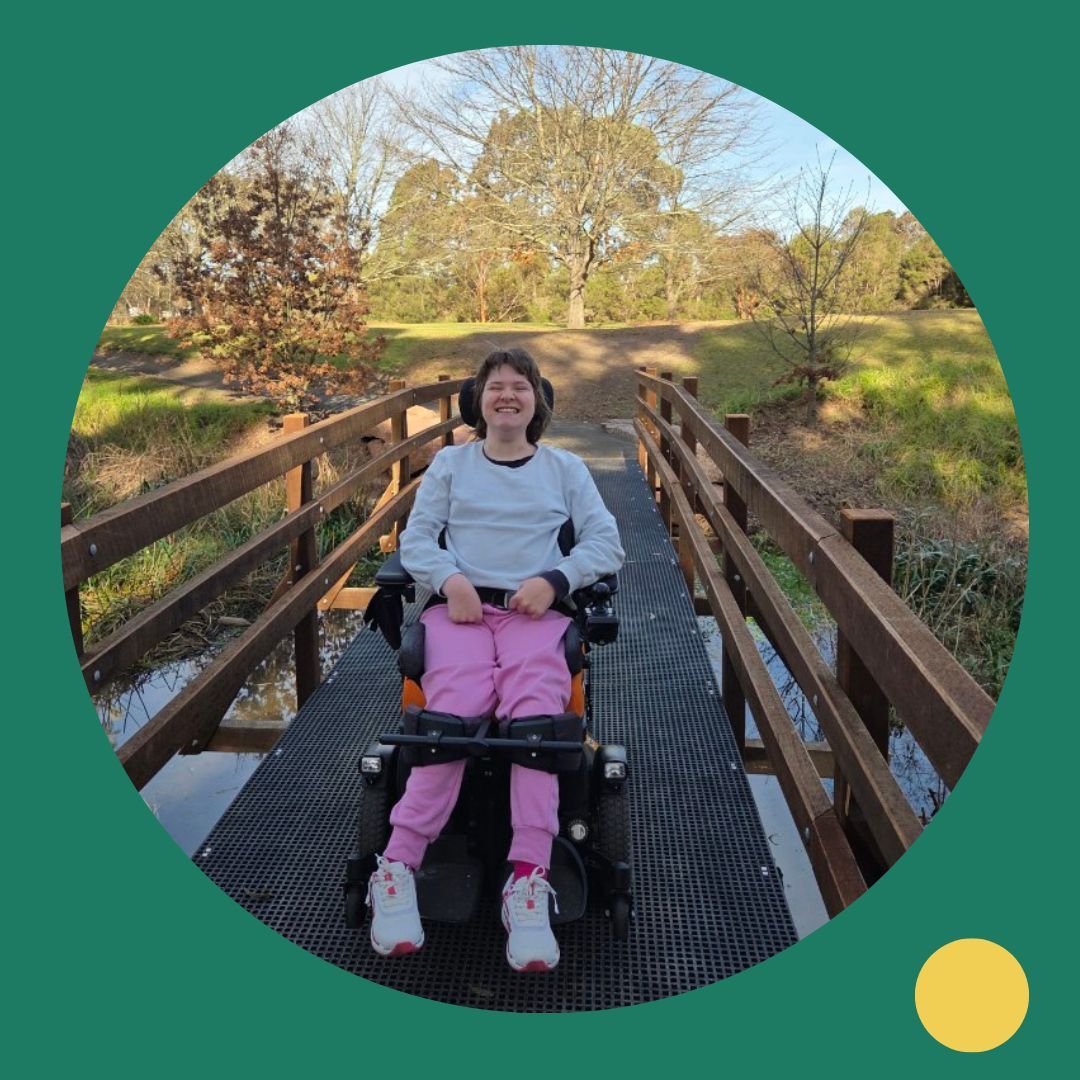
Hi I'm Chantelle,
I have cerebral palsy. I was diagnosed at 2 weeks old. Cerebral palsy is a brain injury which is caused by brain damage which can happen either before, during or after birth. Diagnosis is normally around 2 years old. I was diagnosed early because the doctors realised they had not performed one of their main scans. The MRI revealed damage to the grey matter, causing a large proportion of it to die (turn white), depending on which part of the brain has been damaged. My brain damage was in the Cerebellum (the Cerebellum is where the brain controls movement or the movement centre).
My cerebral palsy affects my movement and coordination which greatly affects my balance and stability. Cerebral Palsy also means I have tight muscles (spasticity) and involuntary movements (dystonia). This means I use a wheelchair for my mobility and have lots of equipment, including:
• Manual wheelchair
• Power chair
• Sara Stedy, which I use to help with transfers
• Commode chair for toileting and a different one for showering.
Cerebral palsy means that daily activities like getting out of bed and going to the toilet, etc., require someone to help me do these tasks. I also need overnight support.
If I want to go out and about somewhere this requires mental planning ahead. These are just some of the things I need to think about: Is the place accessible (step-free)? Can I access the dining table set up? Can I fit underneath it? Can I get in close enough to eat? Is there an accessible toilet? (Do I fit in the accessible toilet? Is there enough room to manoeuvre around to transfer?
One of the biggest issues is with toilets. Normally, most accessible toilets are not suitable for me due to the layout configuration as there is typically no hoists, but if there is one it is a sling. Slings are my last choice due to the extra time it takes and the unknown of it all.
The lack of accessibility of the toilets means that I won't be able to stay as long as I planned or I won’t go.
I don't normally use a sling because I can and typically use a transfer as I have the ability to use the bars to stand up and swivel on to the toilet. I do however need help with my chair, clothes and wiping, then I sit. Once I sit, I hold on to the bar with one hand and rest my other hand on my chair to help me balance. The lack of accessibility of the toilets means that I won't be able to stay as long as I planned or I won’t go.
As you can probably imagine just that one task takes a while and that's just one thing! Then there is the matter of eating or finish eating. That takes even longer. Then add on locating a car park that works, which often means loading/unloading on the road due to the length of the disability car parks and locations - it takes a while!
Because of all of the different things to consider, I created Beautifully Accessible in which I am here to share accessibility ideas, products and experiences to suit everyone's unique abilities. Follow me on Instagram @beautifully_accessible. I hope you roll with me on this roller-coaster life.

