
How Can an Exercise Physiologist Support People with Cerebral Palsy?
Ever heard the phrase ‘Exercise is Medicine’? There’s real truth (and scientific evidence) behind it - and a whole group of health professionals trained with the expertise to prescribe this ‘medicine.’
Accredited Exercise Physiologists (AEPs) are university-qualified allied health professionals who specialist in using exercise to treat and manage health conditions and support healthy ageing. They are experts in understanding how the body moves and responds to physical activity, and how exercise can be used safely and effectively -especially for people living with disability or long-term health conditions.
You can also visit our Essential Websites section to explore Exercise Physiology and other allied health supports for people with cerebral palsy.
For people with cerebral palsy, being physically active isn’t always straightforward. There can be additional challenges, including access to suitable programs, transport, and environments, as well as personal factors like fatigue, pain, and changing capacity. These barriers can make it harder to stay active, increasing the risk of reduced fitness, loss of function, and secondary health conditions over time.
Often, it’s also about finding the right balance, or learning how to ‘ration’ your energy, using your energy wisely so you can be active for the required health and function benefits, without leaving yourself with nothing left for the rest of your day.
For people with cerebral palsy, being physically active isn’t always straightforward.
Exercise shouldn’t need to be a chore, but for many people living with cerebral palsy, it is a part of life that cannot be ignored. Many adults with cerebral palsy reflect that staying active earlier in life may have made a difference to how they feel and function now.
This is where an AEP can help.
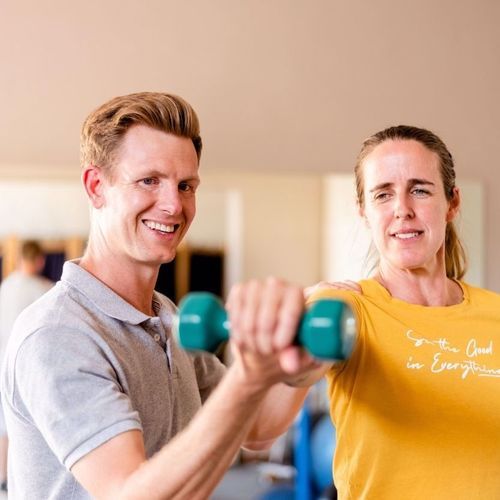
An Accredited Exercise Physiologist works with you (and your family or carers) to develop a personalised, realistic program based on your goals, abilities, and interests. It’s not just about stretches (though we know how much you all love doing them! ha!) — it’s about building strength, fitness, improving movement, supporting independence, and helping you confidently stay active in your community. Just as importantly, they support you to self-manage your health over time. The many health and wellbeing benefits of exercise for people with cerebral palsy include (but are not limited to):
• Build strength and fitness, including muscles that feel weak or tired
• Improve movement and mobility, such as walking, balance, or transfers
• Reduce pain, fatigue, or stiffness
• Support weight management and improved overall energy levels
• Increase independence in daily activities
• Support mental wellbeing, including reduced anxiety, feelings of stress or risk of depression, increase self-esteem and improved mood
• Support long-term health, including heart health and wellbeing
An Accredited Exercise Physiologist works with you to develop a personalised, realistic program based on your goals, abilities, and interests.
The week of the 23-30th May is ‘Exercise Right Week, a national public health initiative encouraging everyone, regardless of age or ability, to be more active.
This week is a great opportunity to reflect on your own relationship with physical activity: Are you doing enough? Remember, even small amounts of activity can make a meaningful difference, especially when it’s enjoyable, tailored to you, and sustainable. And you don’t have to do it alone - there is a whole profession ready to support you.

For more information about exercise, physical activity, and healthy ageing for people with cerebral palsy, Mycpguide hosts a variety of trusted information resources.
Browse the Health and Wellbeing section to find other relevant resources, or visit the Allied Health section of Essential Websites to explore additional trusted organisations and services.