

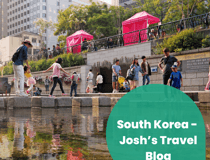
Josh, a young adult with cerebral palsy, reflects on his recent trip to South Korea from an accessibility perspective
In January 2023, I departed Australia for a five-week holiday exploring Vietnam, Cambodia, and South Korea. Part Two of this three-part series will evaluate my experience of South Korea’s accessibility in four key areas: Airport, Hotels, Transport, and Tourist Attractions.
Airport: 3.5/5
The line at South Korea airport was long, but that is not out of the ordinary for airports. Once I got through the line, there was a train line into the city which was super handy. On the train, ticket seats were assigned, so I was a bit hesitant to leave my luggage in the luggage racks as they were far from the seats, but in the end it all worked out.
On the way from South Korea to Melbourne, I had to catch a train and then a bus (both of which were inside the airport as it is so huge) so it could be quite easy to get lost in a completely different terminal, but there are signs everywhere, often using English underneath the Korean.
Hotels Rating 3.5/5
Unlike the other portions of this trip, South Korea was not an organised tour with a tour provider, so we were actually in the same hotel for ten days! It may sound boring staying in the same location for so long, but, after the good part of a month staying in locations for only one or two nights, this felt like a luxury.
Travel Rating: 3.5/5
South Korea actually has a train line to the airport that is super handy. Most of my travel in South Korea was by bus. The bus and train have a similar system to Myki, where you can buy a T-Money card from many convenience stores or at the train station itself, then you top it up and touch on at the turnstile gates. Unfortunately, there was no way to top up online, and you can request a refund at the train station before you leave the country.
Tourist Attractions: Rating: 3.5/5
One of the major tourist attractions we did in South Korea was visit the DMZ (Demilitarized Zone) between North and South Korea. As you can imagine this area has very high levels of security, so passports were needed to order tickets, passports were then checked on the bus on the way in and on the way out. This check was done by the South Korean and American military Once in the DMZ there are certain rules you must follow, and that included what you can and cannot take photos off. These procedures are strict as to keep the peace and make sure no one is defecting from either side of Korea and posing as a tourist.
Final thoughts: South Korea is an amazing place to visit and some highlights of my trip were going to the DMZ, visiting Lotte World, and the countless amount of KBBQ (Korean Barbecue)! Read my next upcoming post to learn my perspective about accessibility traveling in Cambodia. Read my previous post about travel in Vietnam here: Accessibility review of my trip to Vietnam- Josh's Story

This blog post has been provided by Cerebral Palsy Support Network in collaboration with My CP Guide. For more information about travel and holidaying as a person with cerebral palsy, My CP Guide hosts a variety of information resources. Browse the Leisure & Recreation category on My CP Guide to find other relevant resources.