
In this blog post from CPSN, Elizabeth shares her personal journey with cerebral palsy and mental health challenges she faced as a teenager.
By the time I reached my later teenage years, I was well accustomed to living with my cerebral palsy. It wasn’t always comfortable or convenient, so it annoyed me a fair bit, but I knew what my everyday routine consisted of and was slowly learning to work around the physical challenges that cerebral palsy presented.
What came as more of a surprise however, especially as a child of the late 90s and early 2000s, were the mental health challenges that seemed to appear out of nowhere when I was 17.
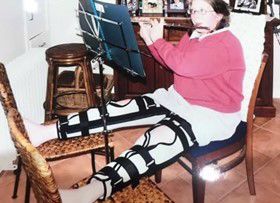
Image: Elizabeth as a teenager playing music.
The Overlooked Impact of Mental Health
I was in Year 10, taking the first of my VCE subjects a year early, and life was busy with lots of extracurricular music, weekends helping my family on our farm, and ever-present exercises and trips to the physio. To anyone looking in, including teachers and my family, my life was pretty good.
Before that day, when I found myself simply unable to get out of bed with symptoms that I would later come to recognise as depression and anxiety, my assumption had always been that cerebral palsy’s impacts on me were purely physical.
The treatment I received from a team of doctors, surgeons and physiotherapists over many years seemingly made the same assumption. There wasn’t a lot of awareness about mental health, and even less education, even for those who were considered to have the utmost expertise in cerebral palsy.
It heartens me to know now that approaches and interventions for the emerging generation of children and young people living with disabilities or chronic illnesses are seemingly far more holistic.
I didn’t initially recognise my experience as the beginning of a significant mental health challenge, and nor did those around me. Of course, as I now look back having received support for my mental health and qualified as a Mental Health First Aider, things make a lot more sense.
Despite spending many weeks in hospital and rehabilitation appointments throughout my childhood and adolescence, I don’t ever recall being asked how I was feeling.
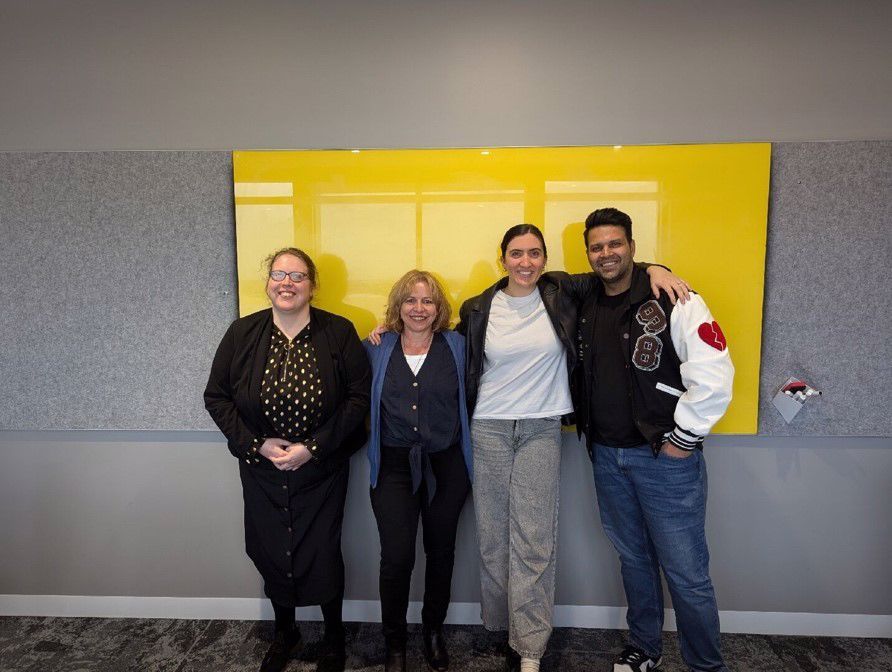
Image: Elizabeth with the team at CPSN.
The Hidden Struggles Behind Cerebral Palsy
My cerebral palsy didn’t cause my mental health challenges, but that I developed them is really no surprise when you consider what growing up with cerebral palsy meant for me: repeated surgeries and grueling periods of rehabilitation that didn’t leave much room for a regular school life and meant many rites of passage that happened within the school gates were also off limits as they weren’t physically accessible; PE classes, school sports teams, the yearly dinner dance and most school camps to name a few.
Repeated medical intervention, despite positive outcomes, compounded my anxiety to the point that simply walking into a medical setting made me queasy and gave me a feeling of dread. I still hate the smell of hospital hand wash and disinfectant for the same reason.
Despite the care and support of my teachers and family, such isolation, plus both the fear and the reality of missing out left me without a consistent friendship group and increasingly lonely. I became a target for our year level bully.
I threw myself very seriously into academic work and music studies, in part as an attempt to patch over my inner misery and keep control over some parts of my life. I kept producing good work and grades that gave my teachers no reason to think that anything was wrong. Looking back, it is easy to see why my struggles were missed. I was fighting a relentless inner battle, but I don’t think you would have known it to look at me.
The Journey to Mental Health Support
In reality, coming to a consistently better place with my mental health took a change of schools, professional support, and later, a lot of work to come to terms with my lifelong identity as a woman with disability.
I often describe my realisation that the impacts of cerebral palsy were going to continue into adulthood as like being dragged kicking and screaming into reality. No matter how hard I worked or how much physio I did, I would still have cerebral palsy.
My real introduction to the cerebral palsy community came through Instagram content creators with cerebral palsy.
The more I read and watched the stories they shared about life with cerebral palsy, the less alone and othered I felt, and the more my experiences were validated.
I started to actively seek information about mental health, how I came to have cerebral palsy and the different ways it affects the body. Turns out it impacts much more than just mobility. I came to understand things that I had always wondered about, like why I hate loud noises and sudden movement and why I so often feel on edge and anxious about new situations. For me, this knowledge is power, and helps me to be a better advocate still today.

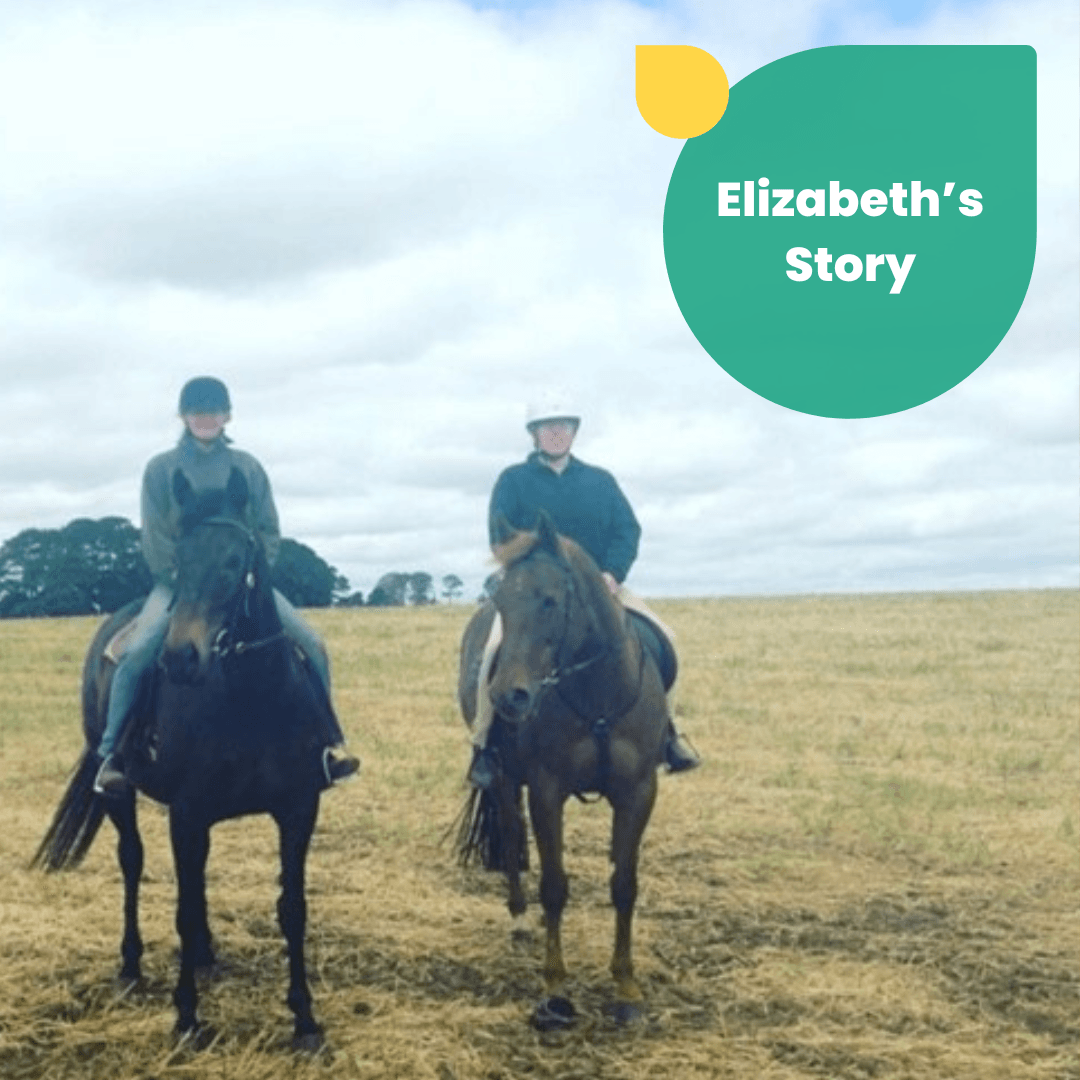
Image: Elizabeth pictured riding a horse.
Finding community: Feeling seen and heard
Living in a regional area as I did, there wasn’t a lot of access to in-person support for those with disabilities, and I didn’t even know about CPSN!
Joining the CPSN community has changed my life and given me not only a group of friends and colleagues that I share lived experience with, but a way to put that lived experience, however difficult it has been, to work supporting others. I now embrace my disabled identity, and the future looks bright.
As I prepared to leave my long-time high school for a new school, one of my teachers said, “I noticed that you weren’t your old self, but I didn’t want to say anything.” My experience demonstrates how easily mental health challenges can be missed for those living with disabilities. If you notice that someone isn’t quite their old self, please say something. It means they don’t have to carry it alone and could mean that they get the help they need. This means everything.

This blog post has been provided by Cerebral Palsy Support Network (CPSN) in collaboration with My CP Guide. For more information about mental health as a person with cerebral palsy, My CP Guide has curated a variety of resources in the Mental health topic category.
Our Essential Websites page also lists a number of relevant services in the Health & Wellbeing section.