

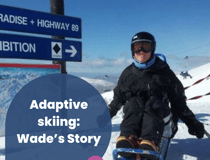
Wade, an adult with cerebral palsy, shares his experiences with adaptive skiing at locations around the world
It's so exhilarating to be on top of a mountain, pointing your skis downward, taking a deep breath, and then bombing down a ski run, hearing your skis carve through the snow with every turn as the fresh powder covers you from head to toe.
I was introduced to the world of adaptive skiing in my early 20's at the National Sports Center for the Disabled (NSCD) in the snowy US state of Colorado. Living just 90 minutes from the NCSD allowed me to ski quite often and meet an amazing group of dedicated adaptive ski instructors whilst gradually improving my own skiing skills. A year later, I also started skiing at the Breckenridge Outdoor Education Center (BOEC). I spent a lot of time with the intern ski instructors there, and before I knew it, I was skiing at other resorts in the Rocky Mountains as well: Vail, Crested Butte, Copper Mountain, Keystone, and Park City.
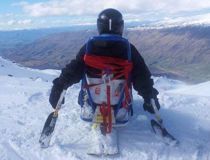
A couple of years later, I was invited to Jackson Hole ski resort in Wyoming to test their prototype sit-ski, which was built from spare parts. Jackson Hole has one of the largest vertical drops in the US (1,262 metres), so it’s an amazing place to ski! I also advised on how to start their own adaptive skiing program, which 25 years later, is still thriving.
After I moved to Australia for work in 2005, I wanted to continue skiing and luckily, I came across Disabled Wintersport Australia (DWA). DWA (Disabled Wintersport Australia DWA | Adaptive Skiing & Snowsports) is the National Sporting Organisation (NSO) body responsible for adaptive winter sport in Australia. I’ve enjoyed skiing with DWA guides at Mt. Hotham and Falls Creek, and DWA also operate at Mt Buller, Thredbo, and Perisher. You can also become a member of DWA, which includes concessions of up to 50% on lift passes and lessons at those partner resorts.
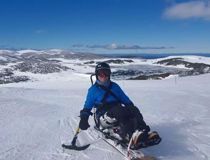
Adaptive ski programs cater for everyone: stand skiers/snowboarders who require some adaptive equipment, sit-skiers who can ski independently, or sit-skiers like me who are tethered to a guide instructor because they might need help getting back up after a fall. Don’t think you’re able to ski? No problem! Even if you are unable to ski, the guide instructors can put you in a sit-ski and “bucket” you down ski slopes as fast as you want for a fun-filled day!
One of the great things about adaptive ski programs is that they allow people with disabilities to enjoy Australia’s alpine regions with family and friends, or even with classmates on a school excursion whilst helping foster self-confidence and inclusion.
Nothing beats a day of amazing views, awesome skiing, and a relaxing “après-ski” at the end of the day. So, if you’re up for trying something new during winter, give it a go!
For those looking to ski further afield in New Zealand, you can contact Snow Sports NZ (About competing in adaptive ski racing and para snowboarding in NZ » Snow Sports), which is an organisation similar to DWA. I’ve experienced amazing powder-filled ski runs at both Cardrona Alpine Resort and The Remarkables on the South Island.
If you have found this blog helpful or would like to reach out, please don’t hesitate to contact me via LinkedIn: Wade Costley | LinkedIn

For more information about sports and recreation as a person with cerebral palsy, My CP Guide hosts a variety of information resources. Browse the Leisure & Recreation category on My CP Guide to find other relevant resources.