

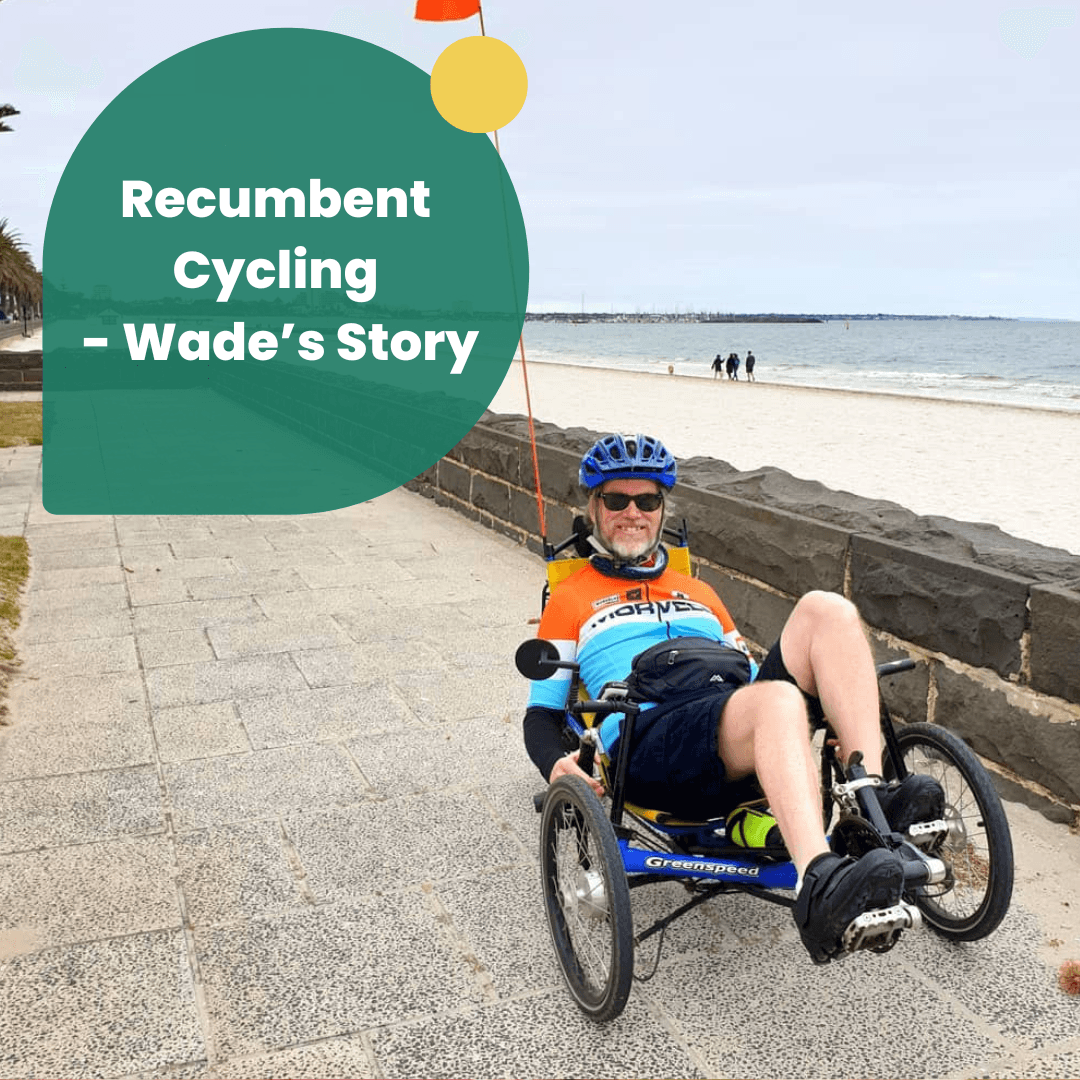
Wade, an adult with cerebral palsy, talks about his experiences with recumbent cycling around Australia.
Maintaining physical fitness is important for everyone, and even more so for people with cerebral palsy who are able to exercise. For me, cycling is my exercise of choice. Cycling provides many physical health benefits that are especially crucial to people with cerebral palsy:
- Muscle Strength and Tone: It improves overall muscle function, particularly strengthening the lower body muscles such as the calves, thighs, and glutes.
- Joint Mobility: Cycling is a low-impact exercise, which is easier on the joints than running or high-impact aerobics, making it suitable for people with joint concerns or arthritis.
- Improved Coordination: Cycling improves balance, coordination, and gait, which can help prevent falls and injuries.
- Boosts Immune System: Regular exercise like cycling can strengthen the immune system and make you less susceptible to illnesses.
- Cardiovascular Health: Cycling is excellent for heart health. It strengthens the heart muscles, lowers resting pulse, and reduces blood fat levels, thus decreasing the risk of cardiovascular diseases.
I started cycling during university in the US state of Colorado, as it provided me with a much easier and quicker way to get to classes and get around in general. The hi-tech adaptive equipment of today didn’t exist back then, so I rode around on a big red 3-speed ‘granny’ tricycle fitted out with mountain bike tyres to help me get traction in the winter snow. It was very heavy and certainly wasn’t built for what I put it through, but it got the job done and helped me keep fit at the same time!
Fortunately, there have been many advancements in the design of adaptive cycling equipment in the years since I was in uni, and more manufacturers have begun to mass produce adaptive cycles due to an ever-increasing market.
Here in Australia, I wanted to keep fit as well and luckily found a bike shop that sells recumbent tricycles. Recumbent tricycles are much easier and more comfortable for me to ride, as they allow for my legs to get a workout whilst allowing my upper body to effectively lean back and relax. Soon after I started cycling regularly again, I found that my walking improved and my gait was better. As my endurance increased I started cycling longer distances. After a couple of years, I decided to enter the annual Around the Bay cycling event in Melbourne ( Overview | United Energy Around the Bay | Bicycle Network). I convinced a mate to join me in training for the 50 km route, and we trained together every weekend over 6 weeks in the lead up to the big day.
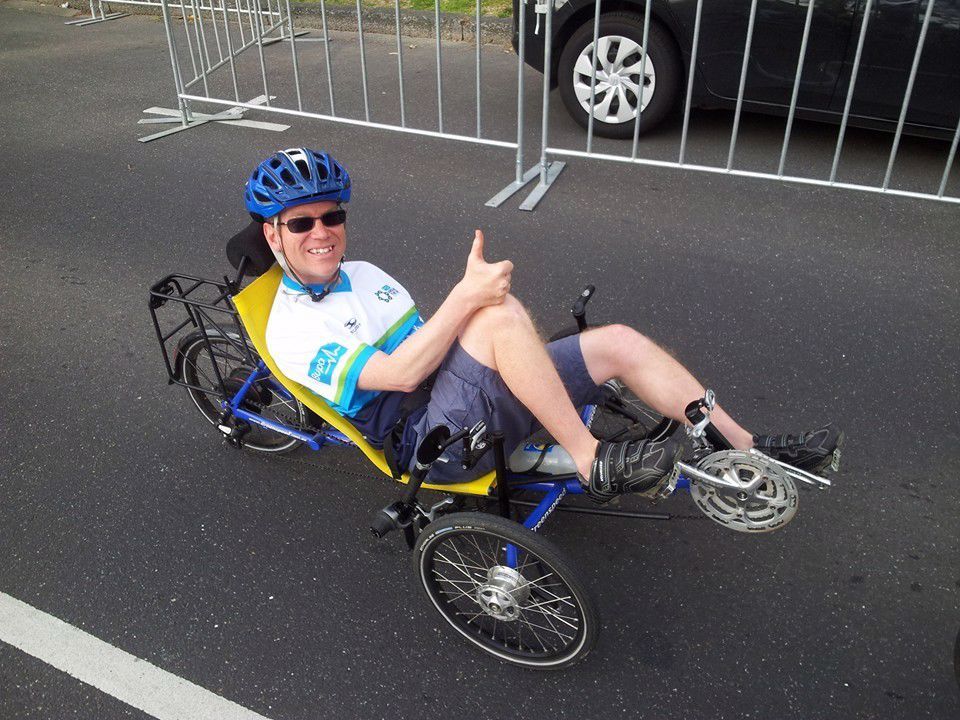
Pictured: At the start line for my first Around the Bay.
The actual event was so enjoyable, and it is one of the only times that cyclists are allowed on Melbourne’s 2.5 km long West Gate Bridge, which is the third longest bridge in Australia. With a maximum gradient of 4.7%, cycling over it is quite the adventure in itself!
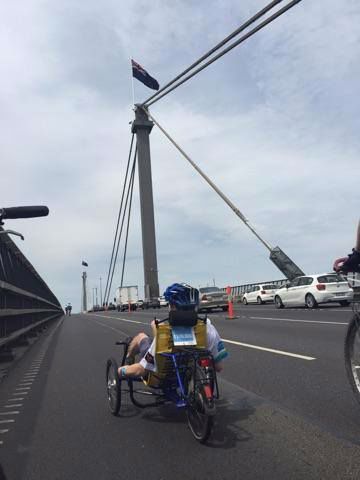
Two years later, I persuaded yet another friend to sign up with me for the 50 km Around the Bay, with the main attraction for her being cycling across the West Gate! However, on the eve of the event, organisers changed the route due to high winds, and cyclists weren’t allowed to ride on the bridge. They instead had us cycle 60 km along the foreshore. The weather conditions turned out to be the worst in the history of Around the Bay, with wind gusts of up to 100 kph. It wasn’t exactly what my friend and I signed up for, but we’re proud to finish a horrendous, wind-blasted journey in which one-third of the participants didn’t cross the finish line.
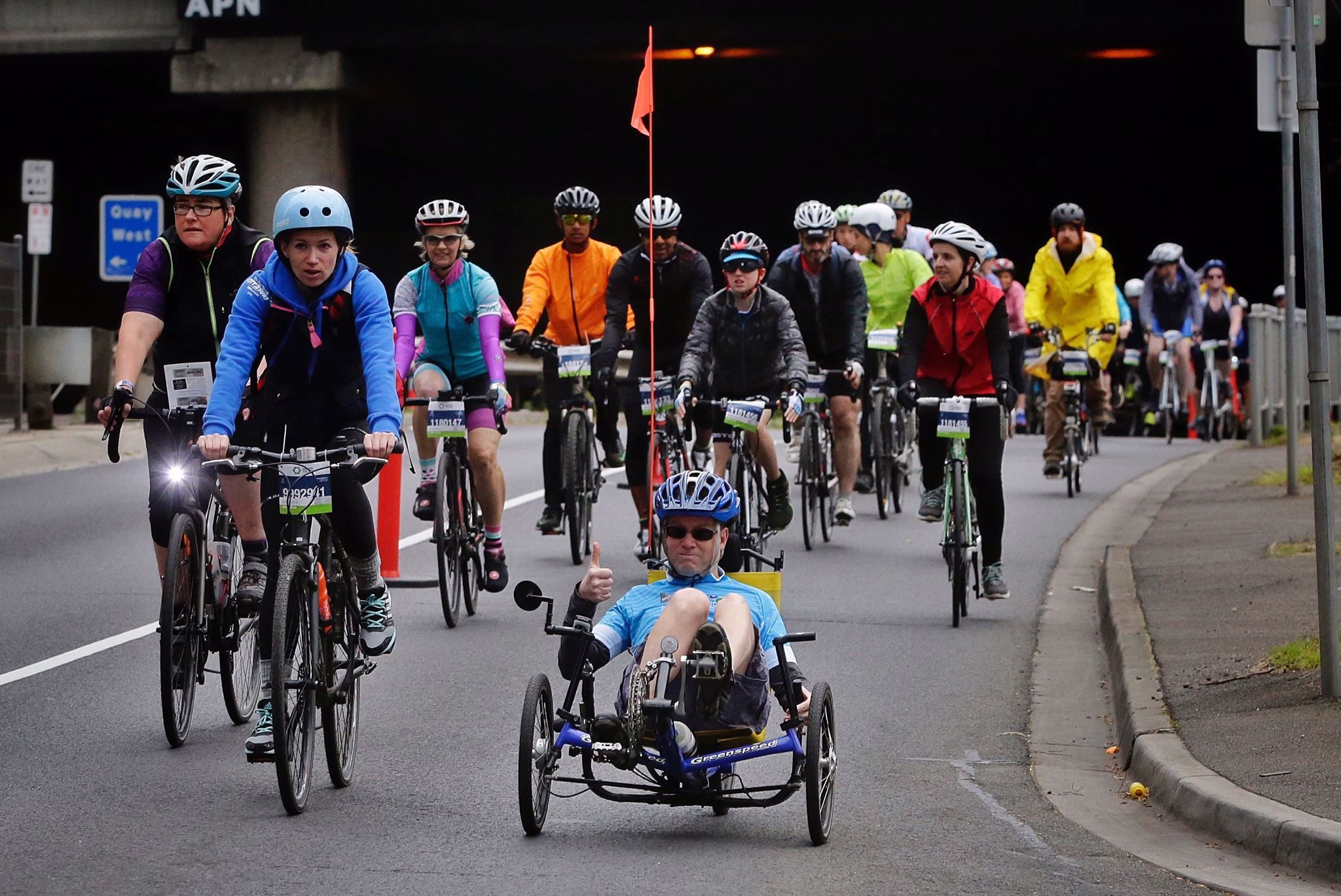
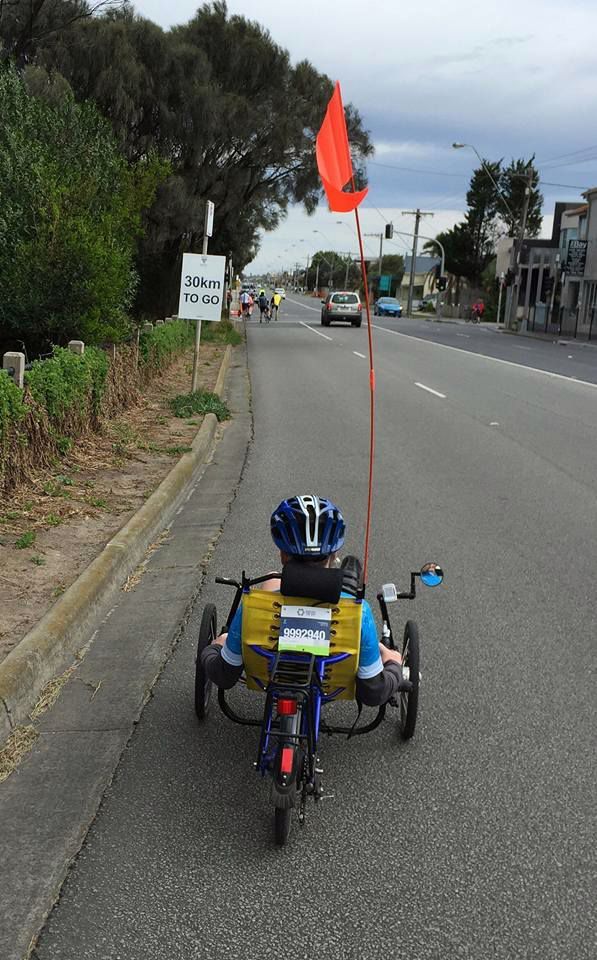
Pictured: My second Around the Bay.
Overall, cycling is great because it is an activity that one can enjoy solo, or with friends and family. In addition, the advances in technology along with the greater variety and availability of adaptive cycles has allowed an increasing number of people with disabilities to participate. I’ve found cycling events such as Around the Bay particularly welcoming to cyclists of all abilities, especially with their offerings of routes with different distances. So, if adaptive cycling sounds like something you would enjoy, grab an adaptive bike or trike and I’ll see you on the road soon!
More information on recumbent cycles in Australia can be found here:
GreenSpeed | Hpv Types | Trisled
Trisled Recumbents | Hpv Types | Trisled
If you have found this blog helpful or would like to reach out, please don’t hesitate to contact me via LinkedIn: Wade Costley | LinkedIn

For more information about sports and recreation as a person with cerebral palsy, My CP Guide hosts a variety of information resources. Browse the Leisure & Recreation category on My CP Guide to find other relevant resources.