

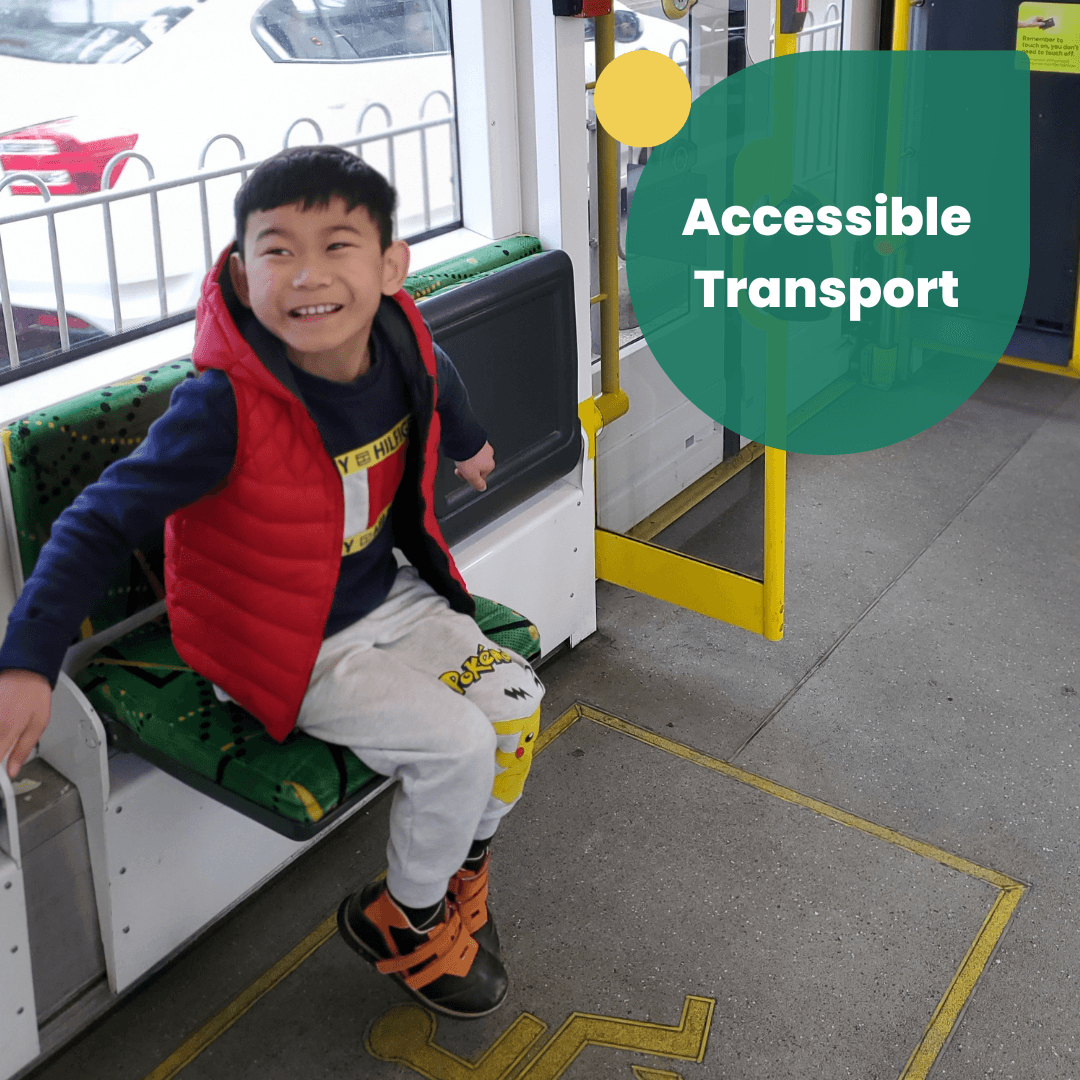
Chandler's mother Audrey shares the story of her son's experiences with public transport as a child with cerebral palsy
If you ask Chandler about his favorite things in the world, trains and trams are bound to come up near the top of his list. There’s something magical for him about the rhythm of the tracks, the bustling stations, and the journey itself. Whether we’re hopping on a city tram or boarding a suburban train, Chandler’s excitement is contagious.
But as much as he loves public transport, our journeys are often met with challenges, especially regarding accessibility. While newer trams and trains have made strides to be more inclusive, older trams and even some train stations can be challenging to navigate, especially for those who rely on walkers, wheelchairs, or other mobility aids.
The Struggles with Older Trams
Some of the classic trams Chandler adores have a timeless charm and bring out the inner child in all of us. But with their narrow passageways, tight spaces, and high steps, they aren’t always welcoming for individuals who need additional mobility support. The narrow entry and steep steps can make boarding nearly impossible without help. These older trams also often lack designated spaces for wheelchairs or walkers, making it hard to get comfortable and safe once on board.
For Chandler, who loves watching the world go by through a tram window, this is a real disappointment. He sees the trams and dreams of riding them, but the accessibility issues sometimes turn that dream into a missed opportunity.
The Platform Gap on Trains
Train travel presents its own set of challenges. Chandler is always eager to hop on the train and enjoy the journey, but even here, accessibility issues can get in the way. One of the most concerning obstacles is the gap between the train and the platform. For Chandler, the gap is both wide and deep enough to make boarding or alighting from a train feel risky. Without someone to assist, that space can feel like a big barrier, both physically and mentally.
These gaps are especially concerning for parents of children with mobility challenges, as a misstep or a lack of balance could lead to an accident. We always keep an eye out and offer a steady hand, but the anxiety is real.
When Accessibility Breaks Down: Out-of-Service Lifts
One of the biggest hurdles we’ve faced is when station lifts are out of order. While in Sydney recently, we found ourselves stuck when the lifts we needed to reach a particular platform weren’t working. It’s frustrating enough for anyone to face this, but when you have a child who relies on mobility aids, it adds a new layer of stress. In this case, we had no choice but to carry Chandler up the stairs—something we’d rather avoid, not just for his comfort, but for safety reasons.
Unreliable accessibility features, like broken lifts, make a huge difference to families like ours. They can turn what should be a smooth travel day into a complicated, exhausting experience.
The Bright Side: Newer Models and Accessible Solutions
While these challenges can be frustrating, it’s encouraging to see that newer trams and trains are moving toward greater accessibility. Many cities are adding low-floor trams, which allow easy boarding with wide, level entrances, making it easier for people with walkers, wheelchairs, or prams. Some trains have even started implementing raised platforms and automatic ramps to bridge the gap and provide a safer, more seamless experience.
When we get the chance to ride on one of these accessible trams or trains, the experience is like night and day for Chandler. He can board without stress, find a designated space, and enjoy the ride without barriers. It’s moments like these that reinforce how vital accessibility is, not just for mobility but for the simple joy and independence it brings to Chandler and many others.
Looking Ahead
As we continue to travel by train and tram with Chandler, we hope that more updates to accessibility will come along. For now, though, we plan our journeys carefully, choosing routes and transport options that give him the best experience possible. His love for trains and trams hasn’t wavered, and seeing his face light up each time makes all the preparation and extra steps worth it.
To all parents of kids with mobility challenges, we’re with you on this journey. The joy of seeing our kids experience the world is a reward in itself, and as accessibility improves, the adventures will only continue to grow.
For more information about travel as a person with cerebral palsy, My CP Guide hosts a variety of information resources. Browse the Leisure & Recreation category on My CP Guide to find other relevant resources.
You can follow more of Audrey’s and Chandler’s cerebral palsy journey by visiting their Instagram page: https://www.instagram.com/mommyisstilllearning
