
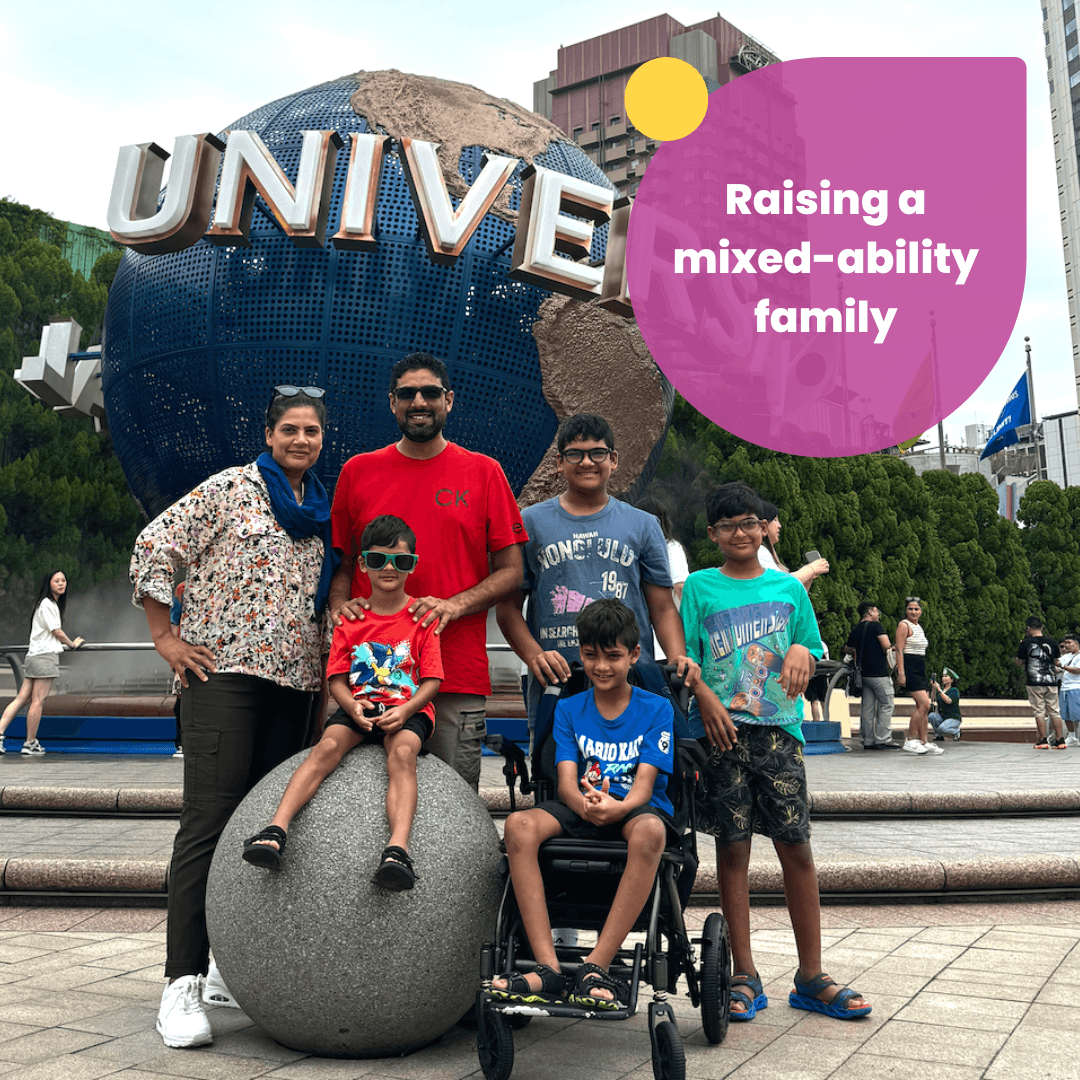
Sabikah, mother of a mixed-ability family with four boys, shares her story of the challenges and joys throughout their family's journey
Parenting is a journey like no other, filled with moments of joy, chaos, and everything in between. In our home, it’s a whirlwind of therapies, homework, laughter, fights, meltdowns and not to forget, mum losing it every now and then! Having two kids with cerebellar hypoplasia, quadriplegic ataxic cerebral palsy and multiple other diagnoses, and two neurotypical kids, life is nothing short of an adventure. Let me share what this journey has taught me—lessons of resilience, love, and a whole lot of flexibility.
Each of my children is a world of their own. My kids with cerebral palsy face daily challenges that require therapies, medical appointments, adaptive equipment, and a lot of flexibility and understanding. My neurotypical kids, on the other hand, have their own busy schedules with school, sports, and social activities. It’s like running two separate, intertwined marathons. To keep us all on track, I fully rely on a digital planner. It’s our family’s roadmap, helping us juggle everyone’s unique needs. But even with the best plans, life happens—appointments run late or get rescheduled, meltdowns occur, or unexpected opportunities for connection arise. And that’s okay.
I’ve learned to embrace the unpredictability and focus on what truly matters: making each child feel seen and valued.
I’ll be honest: there are days when the weight of responsibilities feels like too much. Over the years, I’ve built a network of support that I lean on regularly—therapists, doctors, family, friends, and even other parents who understand this unique journey. I have learned to say ‘No’ to anything that does not align with our family’s goals and learned to say ‘Yes’ to anyone offering help. Asking for help doesn’t mean you’re failing; it means you’re human.
As a family having a mix of kids with and without disability, it has been vital for us to make sure each child is individually given their due importance. We’ve made it a priority to foster open conversations in our home. My neurotypical kids know they can talk about their feelings, no matter how complex or contradictory they might be. Sometimes, we read books or articles online about cerebral palsy or other disabilities together or involve them in therapy sessions to help them better understand their siblings’ world.
They have learned so much about patience and empathy through their siblings with cerebral palsy. These small efforts go a long way in nurturing compassion and teamwork.
But let’s be real, there are also moments of frustration and jealousy as no matter how much I try, I am never able to give the equal amount of time to the neurotypical kids.
Life in our household is chaotic but it is also a series of small victories. Anytime one of my disabled kids achieve a milestone, we cheered like they have won a medal in Olympics. When we managed to have a meltdown-free family outing, it felt like winning the lottery. These moments may seem minor to others, but to us, they are everything. They remind us of how far we’ve come and keep us motivated for the road ahead. My two kids with cerebral palsy are the most determined & resilient kids I have known. And my two neurotypical kids are the most empathetic, helpful, and compassionate kids.
Raising my four boys has been the greatest challenge and the greatest joy of my life. It’s a journey that has taught me to cherish the small things, find strength in unexpected places, and never underestimate the power of love and resilience. To parents navigating a similar path, know this: you are not alone. There is a community out here ready to support you, celebrate with you, and walk alongside you. I started capturing our journey a few years back on Instagram, you can check our page on https://www.instagram.com/thecrazyhousehold

For more information about parenting children with cerebral palsy, My CP Guide has curated numerous resources including our Parent and carer wellbeing handbook. Browse Support for parents and carers for more information resources.