
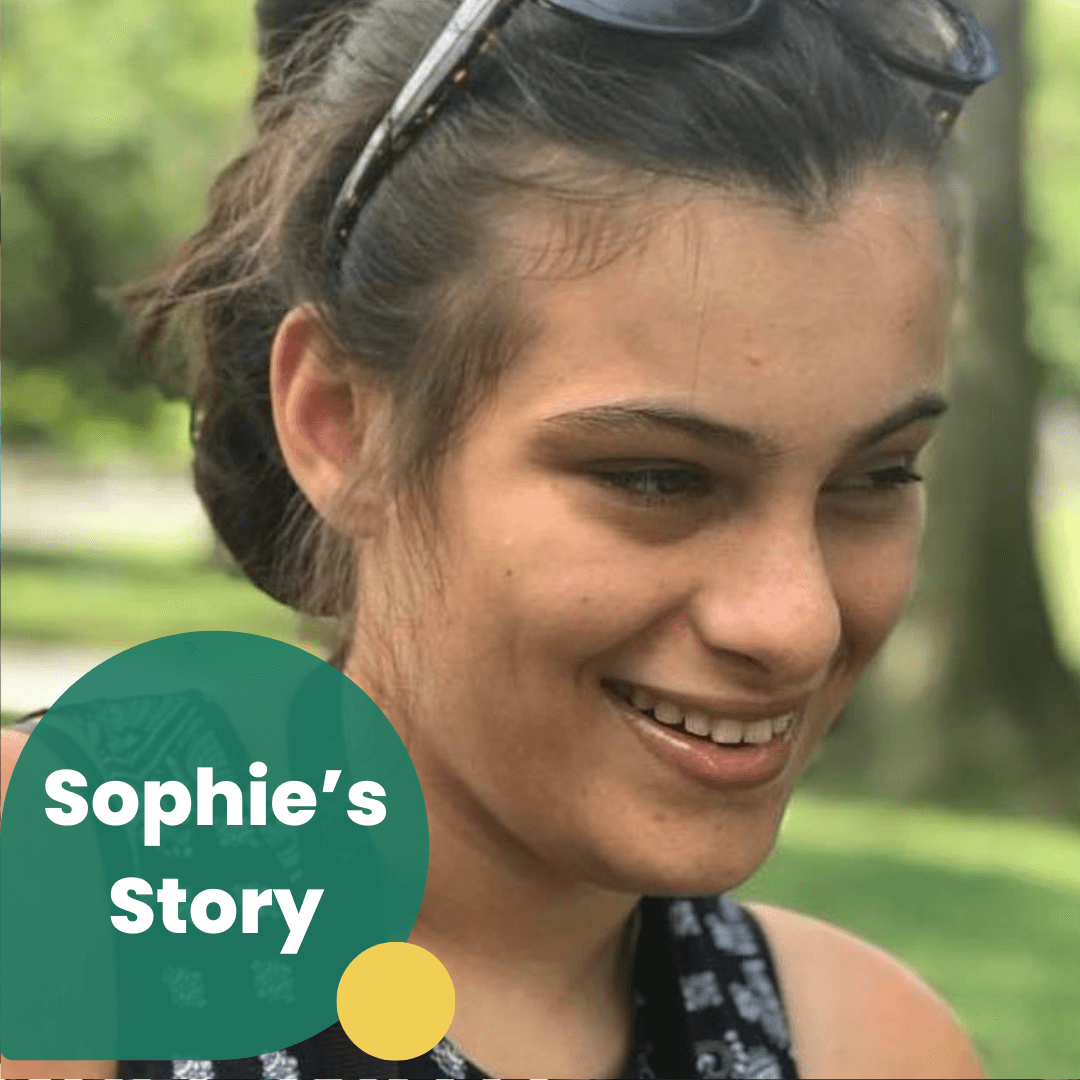
Sophie, an adult with cerebral palsy, shares her story about the emotional journey and practical challenges of ongoing healthcare
Has there ever been a place in your life that would overwhelm you with anxiety because of its association with painful procedures? Procedures that will dramatically improve your quality of life. But on the flip side of this, you also feel a strange sense of comfort, familiarity, and acceptance.
Growing up with cerebral palsy, this was my relationship with the Children’s Hospital at Westmead. Where car journeys were often filled with tantrums as I would cling so hard onto the car seat, using all my weight to push back into the seat, making it near impossible for Mum and Dad to pull me out of the car to attend my appointments. As I would walk through the big, white, automatic double doors, I would be struggling to see through the welling of my tears. I'm trying to master the combination of walking in a walking frame, up corridors that feel like they are never going to end, whilst gasping for breath in between all of the sobbing.
Walking out of the lift that would play the same soft music on repeat for 18 years, where feelings of trauma and comfort coexisted. I see the sign ‘Kids Rehab’.
I would be greeted with the same smiling faces that remained largely consistent over my entire childhood. I see other kids with cerebral palsy, either playing with the same toys that were old and dusty or I would see the older teenagers being bored out of their brain whilst the doctor is running hours behind schedule.
Whilst this place terrified me, it also brought a feeling of being accepted and included for who I was because it would be one of the few settings where I would see another kid just like me, with the same walking frame and we would be able to compare stickers that we had plastered all over our frames to make it ‘cool’. We would be having running races up and down the corridor to entertain ourselves whilst our parents talked to one another about the latest treatment for cerebral palsy. I’m sure at times, they were talking about some of the challenges that they faced bringing up children with disabilities. But for me, at the time, this was more than just about winning a running race, it was about being on an equal playing field as I knew that the person next to me experienced similar if not the same challenges.
Once I became more aware of my condition into my early teenage years, this clinic became much more than just a place to belong and connect with others, it was a place that I felt confident in the staff and doctors that I was under the care of. Because they had watched me grow over many years, but more importantly, they had the experience, knowledge, and training in cerebral palsy. This brought me a great sense of comfort and confidence to know that even if I didn't have all the answers, I could go to them and ask for advice.
Even if they didn’t have the perfect solution, we would work collaboratively to solve any issue at hand.
However, that dreaded year finally came: ‘18’. For teenagers that don’t have disabilities, this represents an exciting new chapter in their lives, full of big milestones like leaving school, going on to further education, being able to legally go out and socialise with friends at venues. Whilst I was excited about this journey as I too wanted to experience all of these new life experiences, this excitement was overshadowed by the impending ‘kick out the door date’. This is where I would be told by specialists: “I’m sorry, but you’re too old now to keep coming here. We will have to refer you to adult services”, and whilst they tried to make this sound exciting and like a new adventure, nothing could wipe the look of fear off my face. Simply knowing that I would be leaving everything I have ever known, the specialists that I had put my complete trust and faith in over the last 18 years would no longer be there to provide their expertise, support and guidance. Even the thought of not being able to be rewarded with my favourite coconut and raspberry bread from Starbucks cafe after each appointment felt like I was breaking some sort of world record or tradition.
So, I’m sure you’re probably asking yourself: “What’s the fear all about?”, given that many people have made this transition before and seeing that cerebral palsy is a life-long disability, it would make sense that I would receive the same level of care from a different group of specialists. But you’d be wrong. Where the Children’s Hospital at Westmead referred me to is a geriatric rehabilitation unit filled with patients who were in their senior years and were there because of a medical episode such as a stroke rather than something that they were born with.
If you need any clarification on what the Hornsby Rehabilitation Unit was set up for then look no further than my family. Seeing that it was my Grandfather who specialised in geriatric medicine, was responsible for setting up a unit of this nature in NSW. Whilst I am very proud to have come from someone who was so forward thinking to have this facility available to older Australians, it became very apparent that these doctors did not have the same knowledge, expertise, nor were they willing to collaborate at the same level that I had previously done with my other allied health professionals.
This approach is something that I have really missed as part of my overall care since leaving paediatrics and still to this day.
Nine years later, as a 26-year-old, I am still yet to find a specialist who treats adults with cerebral palsy and has this as their main focus.
In summary, I believe that if my experience is anything to go by, and I know that I’m not the only one, the current health system in NSW has a lot to answer for when it comes to the ongoing treatment and care for adults with cerebral palsy. This is something that I would like to see change for future generations so that they can transition from child to adult services without the same anxieties and concerns that I did. But more importantly, we as adults have somewhere to go and ask questions, gather information, and feel confident that as your body ages and changes throughout life, you have someone that is overseeing your care.

For more information about treatments and health management as a person with cerebral palsy, My CP Guide hosts a variety of information resources that can be applicable for people of all ages. Browse the Managing CP and Health and wellbeing sections to learn more.