
More Than a Pet: How Willow Changed My World
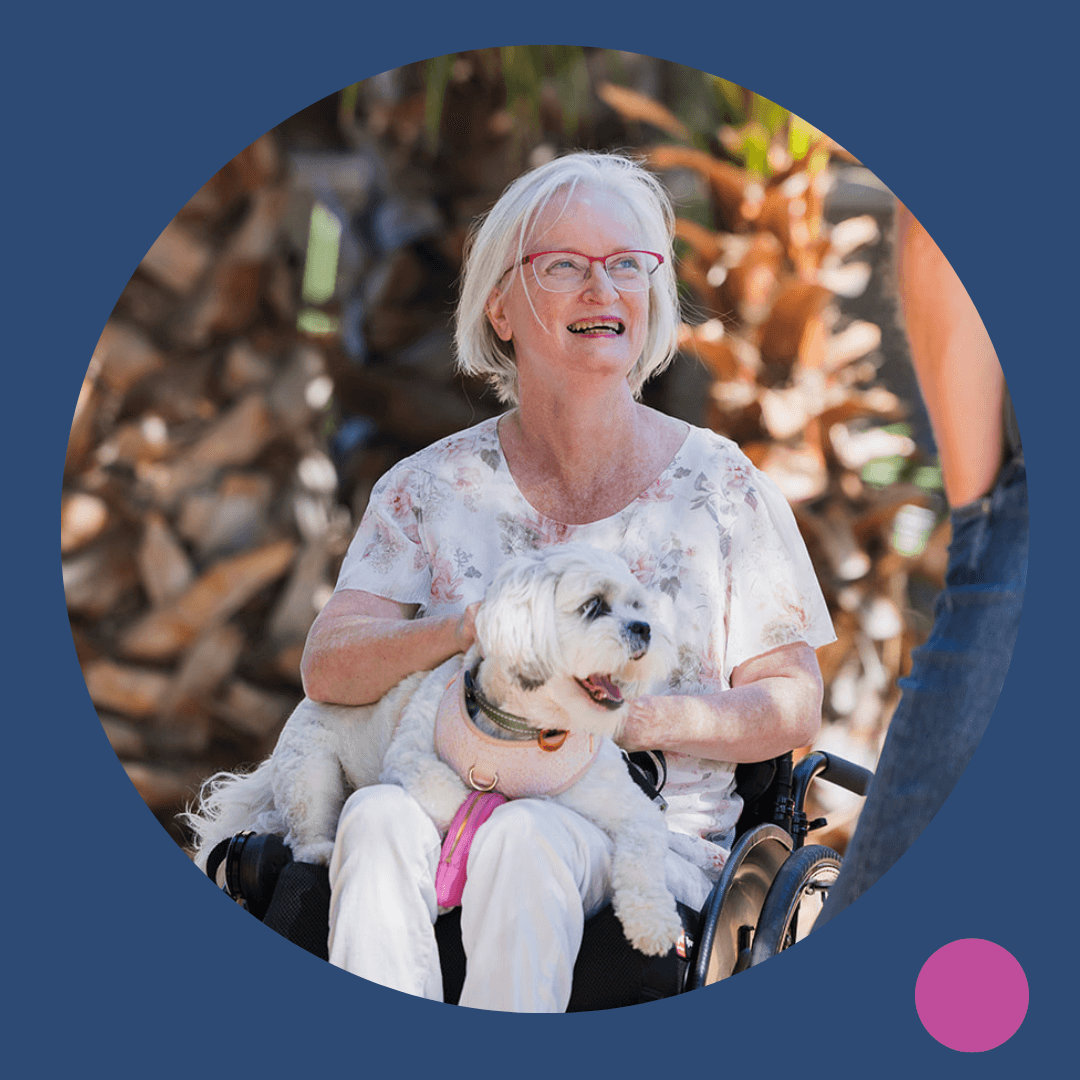
I would like to introduce you to Willow. A two-year-old Shitzu-Maltese cross. Willow loves walks, socks, frozen peas, blueberries (any food really), people and her toy lama. She has personality plus.
I grew up with pets - dogs, cats and chickens. When I moved out of home one of my plans was to get a dog, but the timing was never right.
As I got older my mobility became increasingly difficult, I am now using more mobility equipment and fatigue is difficult to manage. So, the dream of having a dog felt like it was getting further away.
I live alone, in a small apartment and for the most part happily, but I was becoming increasingly isolated, because I was solely working from home and rarely left the house.
Due to my decrease in mobility in the community, I needed to move to using a fully powered wheelchair, which I was very reluctant to do. However, it suddenly occurred to me this might mean having a dog may be possible, because I could independently walk it (or work out a way to). I know the logic may seem odd to some, but that was my incentive.
Once I had the thought a dog may be possible I was excited and I honestly did not think through all the implications – especially having a puppy. Maybe that wasn’t a bad thing.
A lot of things Willow and I have worked out together along the way. Plus, there were a few people who said it was a bad idea. So, if I had listened to others and thought too much it possibly would not have happened.
So one day I went to just take a look and came home, unprepared, with a puppy!
Things I have learnt:
• Puppy stage is really hard. It’s tiring and messy.
• Although, having her as a puppy means Willow is very comfortable with the wheelchair, automated doors, walker, different people coming into the house etc. And she is loyal to me.
• Dog Trainers are a good idea but get one that fits and listens to your situation. The first trainer I got to help, although her techniques may have been spot on, I could not put them into place because of my CP physical restrictions. They did not listen. So I found another. One that listened and adapted to me and Willow. It was expensive, but Willow is now toileted and crate trained.
• We use commands that suit us – wait, sit, stop, up. Plus some basic hand signs.
• Crate training means that Willow goes to bed in her crate at the same time as me and sleeps through to morning. She doesn’t wander the house at night.
• I can’t lift Willow so she wears a harness through the day. So it’s easy to put her leash on, grab her if needed, hoist her on my lap with it etc. She jumps up on my lap for a cuddle, or into the car or onto the wheelchair.
• She walks the streets with me. I hook her leash to the wheelchair so there’s no way she is going anywhere and she can’t tip it over. When we cross busy streets I place her on my lap so she is safe. She also likes the ride and acts like a queen!
• Her food and water bowls are placed on an upside-down storage container so I don’t have to bend all the way to the floor.
For the first year I kept thinking maybe Willow would be better off with a family, with someone that could care for her better, play or walk her more. After two years I now know that none of that is true. I can see she is loyal to me and happy.
Having Willow means I get out of the house every day, rain and heat! But I don’t beat myself up if I’m tired and miss a day. I meet and chat to people because people want to pat Willow. I have a reason to get up each morning.
Having Willow means I get out of the house every day, rain and heat! But I don’t beat myself up if I’m tired and miss a day. I meet and chat to people because people want to pat Willow. I have a reason to get up each morning.
Whether it’s a dog, cat, rabbit or goldfish – there are many positives and joy a pet can bring. Having CP has just meant it took time to find different ways to make things work for both Willow and me.
For more information about accessibility, My CP Guide hosts a variety of information resources. Browse the Accessibility section on My CP Guide to find other relevant resources.
