
Breaking barriers: how cycling is empowering people with cerebral palsy to achieve their fitness goals
In the midst of COVID lockdown, I learned a new skill; everywhere you turned during lockdown, people were posting about their culinary exploits, learning a new language, or - let’s face it - eating and drinking more and watching TV.
But my trick was learning to ride a bike at the age of 46. And it changed my life.
I was born twelve weeks early with mild cerebral palsy. Growing up, I always thought bike riding just wasn’t an option for me.
My CP diagnosis is spastic diplegia, which means it mainly affects one half of my body. In my case, it affects my lower limbs and the way I walk.
My left leg has more spasticity than my right. As a young child, I couldn’t walk more than two steps without a fall. But after a lot of physio and operations including two heel cord lengthening surgeries and hip rotations, I walk pretty well (aside from the odd fall) with that classic CP gait – or ‘wobble’, as some of my CPSN Tribe buddies call it!
Getting on two wheels has always been a short-lived proposition. My experience as a child quickly revealed that I could never stay upright for long.
Growing up, I always thought bike riding just wasn’t an option for me. Inclusion has come a long way, as adaptive cycling was just not a thing that people spoke to me about as a kid in the 80s.
Doing work with an exercise physiologist in recent years is helping me achieve great things. The longest I have been able to balance on my left leg (the tighter side) is 14 seconds. After two years’ practice, that’s a big achievement because I started at less than two seconds!
As a child, I was raised not to see myself as different. But as a result, I didn’t talk too much about my CP. It was seldom discussed outside of clinical settings and there were certainly no alternatives offered to me as an aspiring rider with balance issues in hospital or school settings.
This is something that appears to have changed with the advent of research such as the University of Melbourne CycLink project, which I was involved in as a co-investigator on the steering committee.
When I met the researchers for the first time at a CP Achieve conference, they were surprised I had not tried modified bikes as a child. But I think inclusion has come a long way since then, as adaptive cycling was just not a thing that people spoke to me about as a kid in the 80s.
As an adult, I never dreamed that cycling could one day be within my reach. That all changed with the advent of e-bikes, a lot of trial and error, and the help of some key people.
This included support and encouragement from an amazing cycling advocate and two of the best bike shops in Sydney: the wonderful and kind folk at Glow Worm in Marrickville, and Omafiets in Alexandria.
I also received road safety training from BikeWise Australia (offered free during COVID, thanks to City of Sydney), some important safety modifications from Freedom Wheels, and funding through the NDIS, after quite a bit of perseverance and detailed report-writing from Cerebral Palsy Alliance.
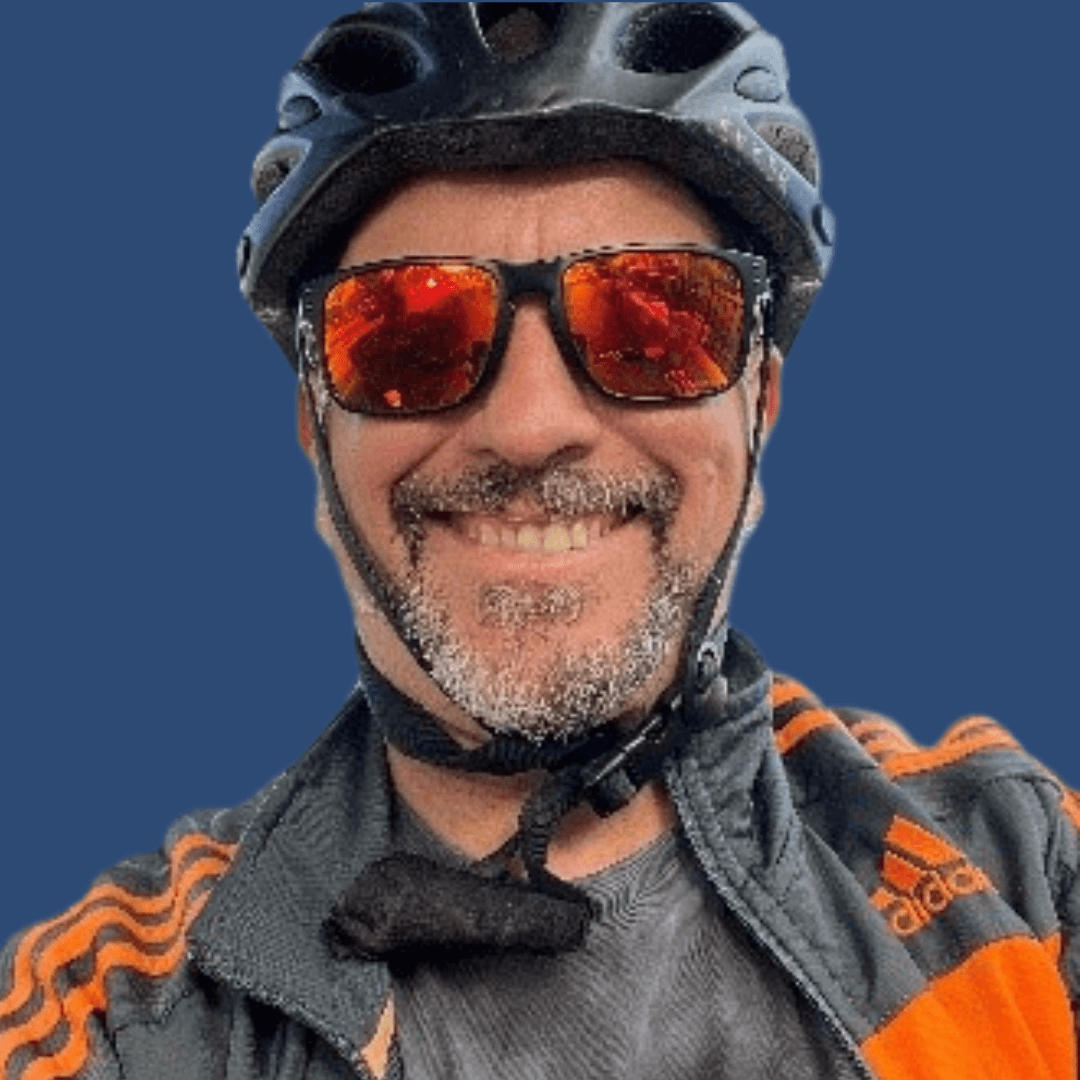
I started the blog TrikeBoy because I want to share my experience and encourage other people with CP to give cycling a go. I also want to record how riding makes me feel. That feeling of exhilaration — it is bloody great!
I started the blog TrikeBoy because I want to share my experience and encourage other people with CP to give cycling a go. I also want to record how riding makes me feel. The ability to optimise my time, to fit more into my day, and see my city in an entirely new way is profound. That feeling of exhilaration has never gone away—it is bloody great!
Modified bikes are a great potential alternative to mobility scooters. They’re not only practical – they can be a lot of fun! When I’m riding my trike, I get stopped in the street at least once a week by people wanting to know what I am riding, where I obtained it, what modifications I made, and whether it was funded through the NDIS.
I would dearly love to see more awareness and research into cycling as an option for adults living with disability, particularly as we age, and especially for adults with CP. I want to share my story so that more people like me might consider exploring all the fun, freedom, and empowerment that cycling can bring.

This blog post is adapted from Finn’s new blog TrikeBoy.
Modified bikes are just one example of an assistive technology (AT) which may help people with cerebral palsy achieve higher mobility. For more information about AT, you can view topics in the Assistive Technology and Equipment section here on the My CP Guide website.