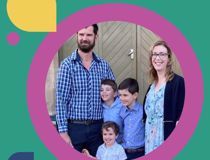
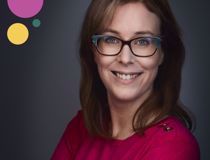
Expectations of children with CP
There was a big difference between my parents’ expectations of me and the expectations of the healthcare professionals. From a very young age, my parents taught me that I would do whatever my siblings were doing - I just might need to find a different way to do it.
In the 1980s people didn’t have high expectations of children with cerebral palsy. Luckily for Debbie Heron, her parents and first teacher thought differently. They pushed her to try new things and believe in herself, which changed the course of her life.
Debbie shares her story with My CP Guide
I was born on the 31st of December 1984 at 24 weeks, which was very early and unexpected. Being born prematurely, I had a massive stroke causing cerebral palsy right side hemiplegia.
Hemiplegia affects the whole right side of my body. The best way I describe it is that I use my left side of my body for everything, and my right side is just for decoration.
My parents already had three older children when I was born and had no concept of having a child with a disability. In the 1980s there was no internet, so they relied on medical advice from doctors. They were told I would never be able to walk or talk, and that I would probably need to go and live in a group home. If I was lucky enough, maybe I could get a place in a day program or a sheltered workshop.
There was a big difference between my parents’ expectations of me and the expectations of the healthcare professionals. From a very young age my parents taught me that I would do whatever my siblings were doing - I just might need to find a different way to do it.
My parents had really high expectations. They believed I could do anything I put my mind towards. My mum is an incredibly strong woman and does not take no for an answer, even today. She never let me feel sorry for myself. Without that fire behind me, I'm not sure where I'd be.
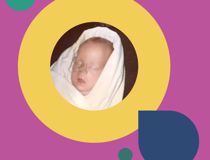
They were told I would never be able to walk or talk, and that I would probably need to go and live in a group home. If I was lucky enough, maybe I could get a place in a day program or a sheltered workshop.
Going to a mainstream school
As a young girl I first was enrolled in a special school. It was an hour away from my home, so I was going to have to catch the special school bus to get there every day. Back in the '80s, they used to strap people with disabilities into the seats. Even if we could sit upright, we still got strapped in with all the body straps.
When my mum realised this, she couldn’t put me through it. She said, "No, that's not you. That's not it for you."
So, she went around to all our local mainstream primary schools asking if I could come and be part of the classroom: "Could she sit up the back? She's toilet trained, she's very quiet. Can she just be in a normal classroom? I don't know how long you'll take her for, but could she just try for Grade 1?"
At first, she didn't have much luck, but then found one teacher who was willing to give me a chance. I started Grade 1 with her, and she taught me how to read. To this day, reading is the skill that has got me to where I am. It's something that I love both as a passion and in my professional life.
I'm incredibly grateful this teacher gave me a chance.
I often think what my life may had been like if my parent’s followed the path the treating professionals were carving out for me, I wouldn’t have been given the opportunities I have had in my life.
I went through my schooling onto university, and my love of reading led me to the law.
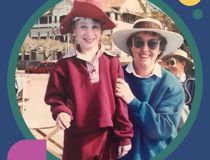
I wake up every day excited to do my work. There's something rejuvenating about finding your place and being able to use something that you always thought was a negative or a deficit in a positive way. It's life-affirming.
Professional life
I'm a lawyer professionally and worked in the legal sector. Then I took time off to have my kids. During this period, I decided I was ready for a career change.
One day I was having a coffee with a local disability advocate who convinced me to get a job in the disability sector. I started working for the NDIA, and then for the Royal Commission into Violence, Abuse, Neglect and Exploitation of People with Disability. Now I help younger people with disability living in aged-care facilities find more age-appropriate housing solutions and divert those under 65 years ‘at risk’ from entering.
I wake up every day excited to do my work. There's something rejuvenating about finding your place and being able to use something that you always thought was a negative or a deficit in a positive way. It's life-affirming.
We are all capable of things beyond our wildest expectations. Because my parents never treated me differently, I never thought I couldn’t do something. Now I support others with disability to imagine and explore options they never thought were possible and use my voice for good.