Using AAC as a bilingual person – Shirls’ story
Communicating with others is an important part of our lives. In the lead-up to World CP Day on October 6th, we are highlighting the #MillionDifferentVoices that people with CP use to communicate. Sometimes, people with CP may use Augmentative and Alternative Communication (AAC) methods rather than spoken language.
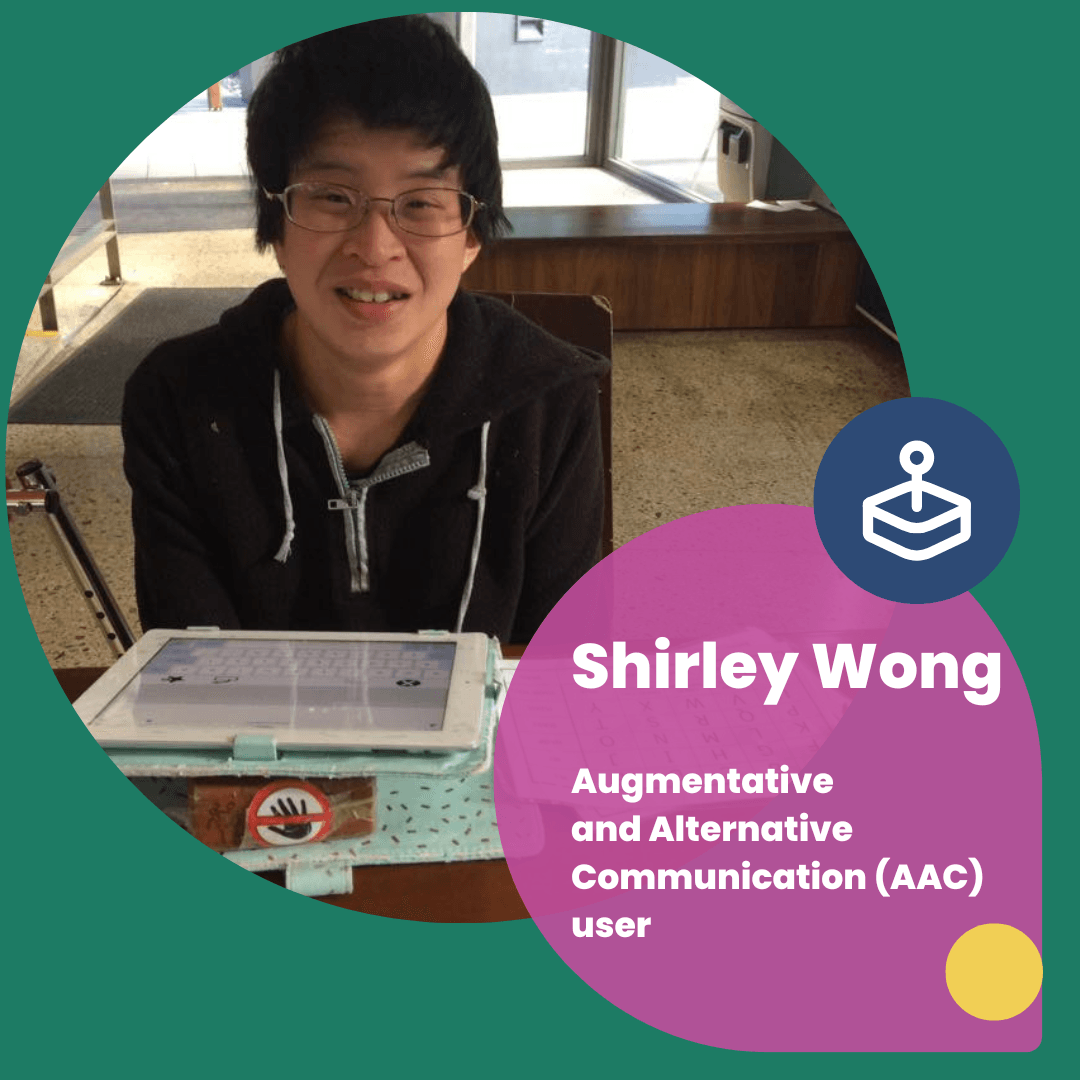
Shirley, or Shirls as she’s better known, an adult with cerebral palsy and disability advocate, recently opened up about the challenges she faces communicating as a bi-lingual person with CP, and how she uses AAC to navigate these challenges.
Hi! my name is Shirls (Shirley) I have cerebral palsy and I use a variety of ways to communicate such as communication board, gestures, eye contact, iPad, basic Auslan sign language and my phone. As I have always been passionate about helping people with Augmentative and Alternative Communication (AAC) to communicate better and have a voice. I want to raise awareness of AAC, change people's attitudes and give knowledge for the future generations.
I have always been passionate about helping people with Augmentative and Alternative Communication (AAC) to communicate better and have a voice.
Being bi-lingual and using AAC
It is hard as a Chinese person, particularly during event such as Chinese New Year or other cultural celebrations.
While I can understand Cantonese, I find it hard to speak and the communication apps on my iPad can't change between languages. I wanted to write this to make others aware of the barriers for those who are bi-lingual when they use multiple communication methods.
AAC systems serve many needs but, not enough attention has been given to those who speak different languages to help them fit into the community while using their devices. Most keyboards including those that are on-screen, and devices in general, are programmed to one language and can be difficult to change.
When people struggle to effectively communicate these electronic language barriers make it much harder.
AAC systems serve many needs but, not enough attention has been given to those who speak different languages to help them fit into the community while using their devices.
Older people may find it harder to grasp a new communication method, so an AAC user may find it harder to talk to their grandparents because of this barrier. Cultural differences not only include different backgrounds but also how people talk and communicate. Some people may have their own dialect known only to people in their specific cultural group. This would be really challenging for people who need to use more than one language on a daily basis.
To eliminate these barriers and create an inclusive society where everyone is able to communicate, more needs to be done as. AAC users can often feel left out of conversations and gatherings because of these language barriers.
Devices need to be available in different languages in order for AAC users to be fully able to participate in an inclusive society.
As technology advances, developers should put more time and money in creating solutions to cater for the diversity for those who have a disability across the world. As 15% of the global population has some type of disability, we should strive to do better so that we can stay connected to our families and our cultural heritage, as well as creating opportunities for people with cerebral palsy to feel heard, valued and included.
Older people may find it harder to grasp a new communication method, so an AAC user may find it harder to talk to their grandparents because of this barrier. Cultural differences not only include different backgrounds but also how people talk and communicate. Some people may have their own dialect known only to people in their specific cultural group. This would be really challenging for people who need to use more than one language on a daily basis. To eliminate these barriers and create an inclusive society where everyone is able to communicate, more needs to be done as. AAC users can often feel left out of conversations and gatherings because of these language barriers. Devices need to be available in different languages in order for AAC users to be fully able to participate in an inclusive society. As technology advances, developers should put more time and money in creating solutions to cater for the diversity for those who have a disability across the world. As 15% of the global population has some type of disability, we should strive to do better so that we can stay connected to our families and our cultural heritage, as well as creating opportunities for people with cerebral palsy to feel heard, valued and included.

If you are looking for resources when it comes to communication, we have a number of information resources available on our site. Visit the Communication section for more information on the tools and resources available to support you. You can also search “AAC” on our site to find resources about Augmentative and Alternative Communication.
Shirls also delivers workshops to schools, community groups, employers, and health professionals to help them better support people who use AAC. Get in touch with Shirls at communicatingwithaac@gmail.com or via her Facebook page.